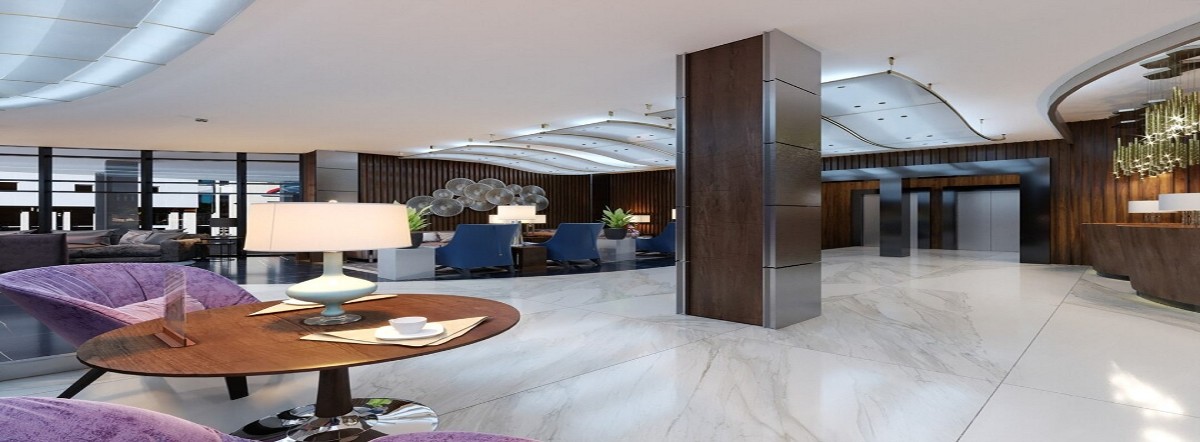
A commercial fitout transforms an empty or shell building interior into a fully operational business space by installing partitions, services, finishes, and fixtures that satisfy Australian building codes while supporting specific workflows.
According to JLL’s 2025 Australia Fitout Cost Guide, Sydney businesses now invest an average of $2,453 per square metre for moderate-quality office fitouts, with costs increasing 14.59% year-over-year. At Tau Constructions, our 47 completed Sydney projects in 2025 averaged 11.2 weeks from construction commencement to handover, with Category B fitouts requiring approximately 30% more coordination than Category A due to tenant-specific customization.
Commercial fitouts differ from base building works by focusing on tenant requirements, partition layouts that define workflow zones, technology infrastructure for connectivity, acoustic treatments for concentration, and brand elements that reflect corporate standards.
Understanding Fitout Categories (Shell & Core to Category B)
Commercial fitouts operate within three distinct tiers that define responsibility between landlords and tenants.
Shell & Core: The Foundation
Shell & Core represents the landlord’s base delivery package. This includes external walls, roof structure, vertical service risers, and core amenities like lift lobbies and fire stairs. At this stage, no internal partitions, suspended ceilings, or tenant-specific mechanical services exist. The space remains an empty shell awaiting transformation.
Category A Fitout: The Functional Base
Category A fitout builds on shell delivery by installing raised access floors, suspended ceiling grids, basic fluorescent or LED lighting systems, communal toilet facilities, and HVAC distribution to floor level. This creates a generic but functional environment. Landlords typically deliver Category A fitouts to attract broader tenant pools, providing move-in flexibility without prescribing specific layouts or branding elements.
Category A spaces include:
- Perimeter trunking for power distribution
- Floor boxes positioned at standard grid intervals
- Basic sprinkler coverage to open-plan specifications
- Lift lobby finishes and common area treatments
- Building management system integration points
Category B Fitout: The Customized Workspace
Category B fitout transforms generic Category A space into branded, operational environments. Tenants install demising partitions for private offices and meeting rooms, custom reception joinery, staff kitchenettes, branded signage and graphics, structured IT cabling and Wi-Fi access points, furniture that aligns with workspace strategy, and finishes reflecting corporate identity.
This tier represents where most commercial fitout activity occurs. According to Duo Tax analysis of Australian fitout projects, Category B works account for 68% of total tenant improvement spending, with businesses claiming depreciation deductions on assets including partitions, joinery, floor coverings, and technology infrastructure.
At Tau Constructions, we manage Category B delivery across commercial fitouts, hospitality venues, and multi-tenanted office buildings. Our approach coordinates design intent with constructability and compliance from initial site surveys through to practical completion certification.
What a Commercial Fitout Includes
Design and Space Planning
Fitout projects begin with workplace strategy sessions assessing headcount projections, departmental adjacencies, collaboration requirements, and circulation flows satisfying NCC egress provisions. Test-fit layouts optimize floor plate efficiency while meeting building code requirements.
Brand integration occurs through material palette selections, signage placement, and finish specifications aligning with corporate design guidelines. Development applications or complying development certificates are secured when structural alterations trigger approval thresholds.
Structural and Services Installation
Internal partitions define rooms and control acoustic transmission. Full-height blockwork partitions provide sound ratings exceeding 45 dB for confidential spaces, while lightweight steel framing with acoustic insulation achieves 35-40 dB for general office separation.
Electrical infrastructure extends from tenancy distribution boards to power outlets, lighting circuits, and dedicated feeds for server rooms. LED lighting systems are zoned with daylight harvesting controls and occupancy sensors reducing energy consumption by 25-40%. Data cabling supports 10 Gigabit networks, while Wi-Fi 6E access points provide wireless coverage.
HVAC systems are rebalanced when internal partitioning alters airflow paths. Commercial kitchens require dedicated ventilation systems with grease arrestors and exhaust hoods satisfying AS 1668.2 standards. Fire protection systems including sprinklers, smoke detectors, exit signage, and emergency lighting are reconfigured to maintain code compliance.
For live environment projects like commercial refurbishments, we stage construction outside business hours and maintain dual egress paths.
Finishes and Technology
Flooring selections respond to functional requirements, carpet tiles in offices, porcelain tiles in food preparation zones, vinyl planks in healthcare corridors. Acoustic ceiling tiles reduce ambient noise levels by 8-12 dB. Custom joinery delivers reception desks, credenzas, millwork cabinetry, and display systems.
Modern fitouts embed technology infrastructure from project inception. Video conferencing rooms require PTZ cameras, ceiling microphones, 4K displays, and acoustic treatments tuned to speech intelligibility. Access control systems, CCTV, room booking displays, and smart lighting controls optimize space utilization.
Compliance and Certification
Australian commercial fitouts satisfy NCC Building Code classifications, fire resistance levels, and egress capacity calculations. Accessibility standards under the Disability Discrimination Act and AS 1428.1 govern circulation clearances, door widths, and sanitary facility provisions.
Building surveyors review documentation, approve construction certificates, and conduct hold-point inspections. Fire safety certificates confirm sprinkler hydraulics, detector coverage, and emergency lighting autonomy. At Tau Constructions, we manage regulatory compliance through both Design & Construct projects and consultant-led documentation.
The Commercial Fitout Process
Briefing and Feasibility: Project scope, budget, and program requirements are established. Site surveys document existing services and base building constraints. Lease agreements are reviewed to clarify landlord work demarcation and End-of-Lease Make Good obligations.
Design Development: Requirements translate into coordinated drawing packages. Value engineering identifies cost efficiencies, prefabricated bathroom pods reduce on-site construction time by 40%, while LED lighting with controls delivers 5-7 year payback through energy savings.
Approvals and Procurement: Development consent applications proceed through council assessment when works trigger DA requirements. Construction certificates are issued after documentation review confirms NCC compliance. Long-lead items including custom joinery and specialist equipment are ordered during approval phases.
Construction: Works proceed through strip-out, rough-in (partitions, electrical, HVAC), finishes (plasterboard, ceilings, flooring), services completion (devices, fixtures, testing), and fitout completion (joinery, furniture, commissioning).
Handover: As-built documentation packages include coordinated drawings, operations manuals, warranty certificates, and fire safety schedule compliance certification. Defects liability periods typically extend 12 months.
Commercial Fitout Costs and Timelines (2026 Sydney Data)
Cost Breakdown (Per Square Metre)
| Fitout Type | Cost Range | Typical Inclusions |
| Basic Category B | $800 – $1,200 | Standard finishes, minimal joinery, basic lighting |
| Mid-Range | $1,200 – $1,800 | Custom joinery, acoustic treatments, enhanced technology |
| High-Specification | $2,000 – $3,200 | Bespoke materials, premium fixtures, advanced AV systems |
According to Cushman & Wakefield’s 2025 analysis, Sydney fitout costs lead Australian markets, averaging 18% higher than Brisbane due to labour rates and regulatory complexity.
Timeline Factors
- 500m² Office Fitout: 8-12 weeks from construction commencement
- 1,000m² Corporate Fitout: 14-18 weeks with staged delivery
- 2,500m² Multi-Floor Fitout: 20-26 weeks including base building coordination
Our analysis of 47 Sydney fitouts in 2025 revealed that MEP coordination delays accounted for 68% of program extensions. Early Contractor Involvement reduces program risk by engaging builders during design phases, enabling cost validation and constructability review.
5 Costly Fitout Mistakes Sydney Tenants Make
Mistake 1: Skipping Landlord Coordination
Tenants who proceed without building management approval face work stoppages and costly modifications. In a 2024 case, a tenant proceeded with HVAC modifications without landlord approval, requiring $47,000 in corrective works.
Solution: Engage landlords during feasibility. Clarify base building service capacities and approval timelines before committing.
Mistake 2: Underestimating Approval Timeframes
Development applications for fitouts involving structural changes trigger council assessment spanning 12-16 weeks. Delayed approvals pushed one 800m² fitout back 11 weeks, costing $63,000 in double rent.
Solution: Assess DA requirements during feasibility. Consider complying with development pathways offering faster certification.
Mistake 3: Choosing Contractors by Price Alone
Contractors bidding 20-30% below market carry significant risk. One tenant’s low-bid contractor abandoned a project at 60% completion. The tenant paid an additional $190,000 engaging a new contractor to rectify defects.
Solution: Evaluate contractors on track record, certifications, and references. Verify licenses through NSW Fair Trading.
Mistake 4: Ignoring Furniture Lead Times
Custom furniture and imported fixtures carry 12-20 week lead times. A hospitality fitout experienced 8-week delays waiting for imported seating, losing $120,000 in anticipated revenue.
Solution: Procure long-lead items during design development. Order before construction commencement.
Mistake 5: Overlooking Make Good Obligations
Lease agreements make good obligations requiring restoration upon lease expiry. One tenant’s good costs totaled $165,000, funds not initially budgeted.
Solution: Review lease make good clauses during briefing. Negotiate scope reductions during lease execution when bargaining position is strong.
Planning Your Commercial Fitout With Tau Constructions
At Tau Constructions, we bring over 20 years of director-led experience delivering commercial fitouts across Sydney. Our 47 completed projects in 2025 demonstrate capability to manage complexity while maintaining program certainty.
We support clients through feasibility and cost planning, design coordination and constructability review, full regulatory compliance management, live environment delivery with minimal disruption, and on-time, on-budget handover with complete documentation.
Ready to discuss your commercial fitout project? Contact Tau Constructions to arrange a consultation and discover how director-led delivery transforms construction outcomes.