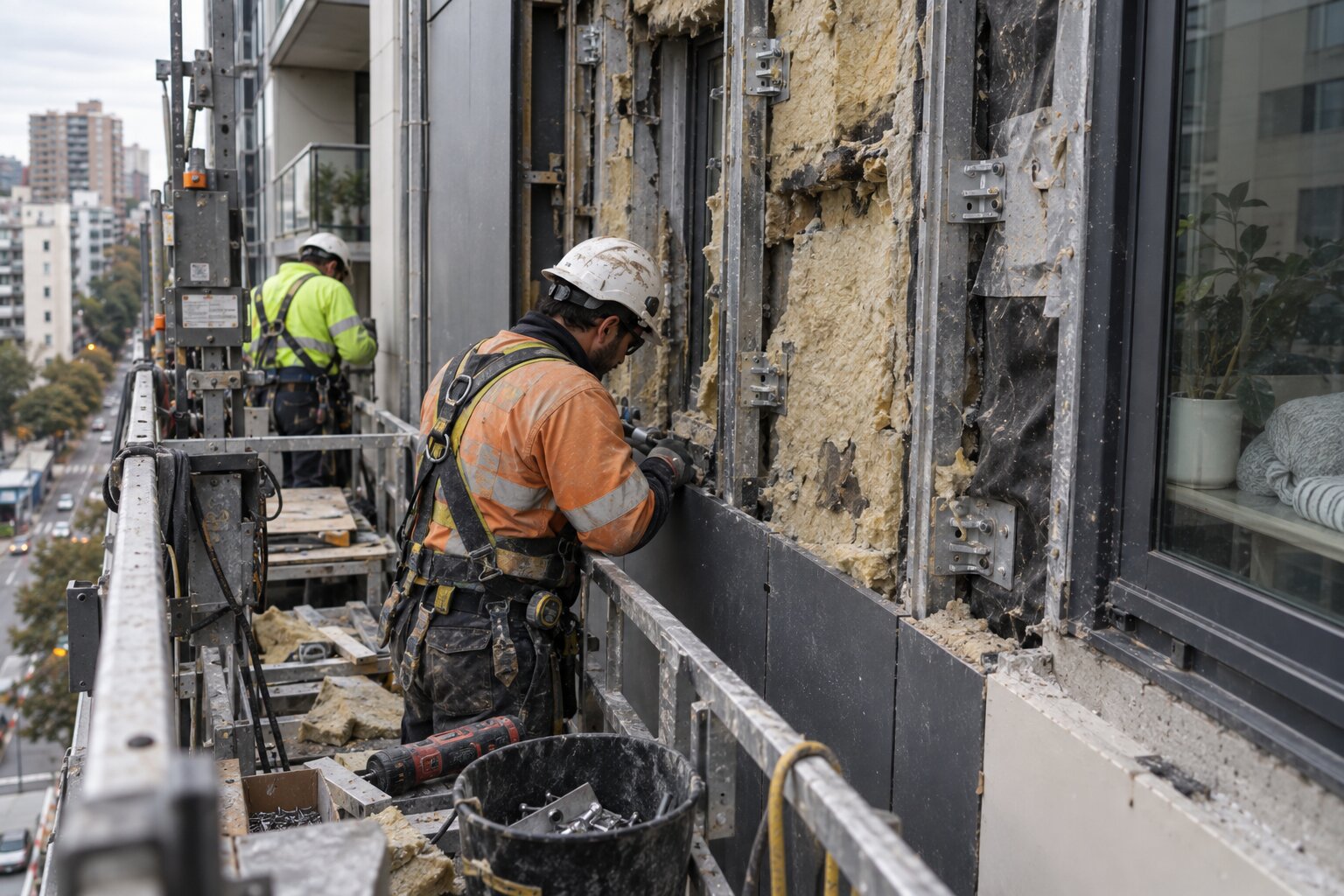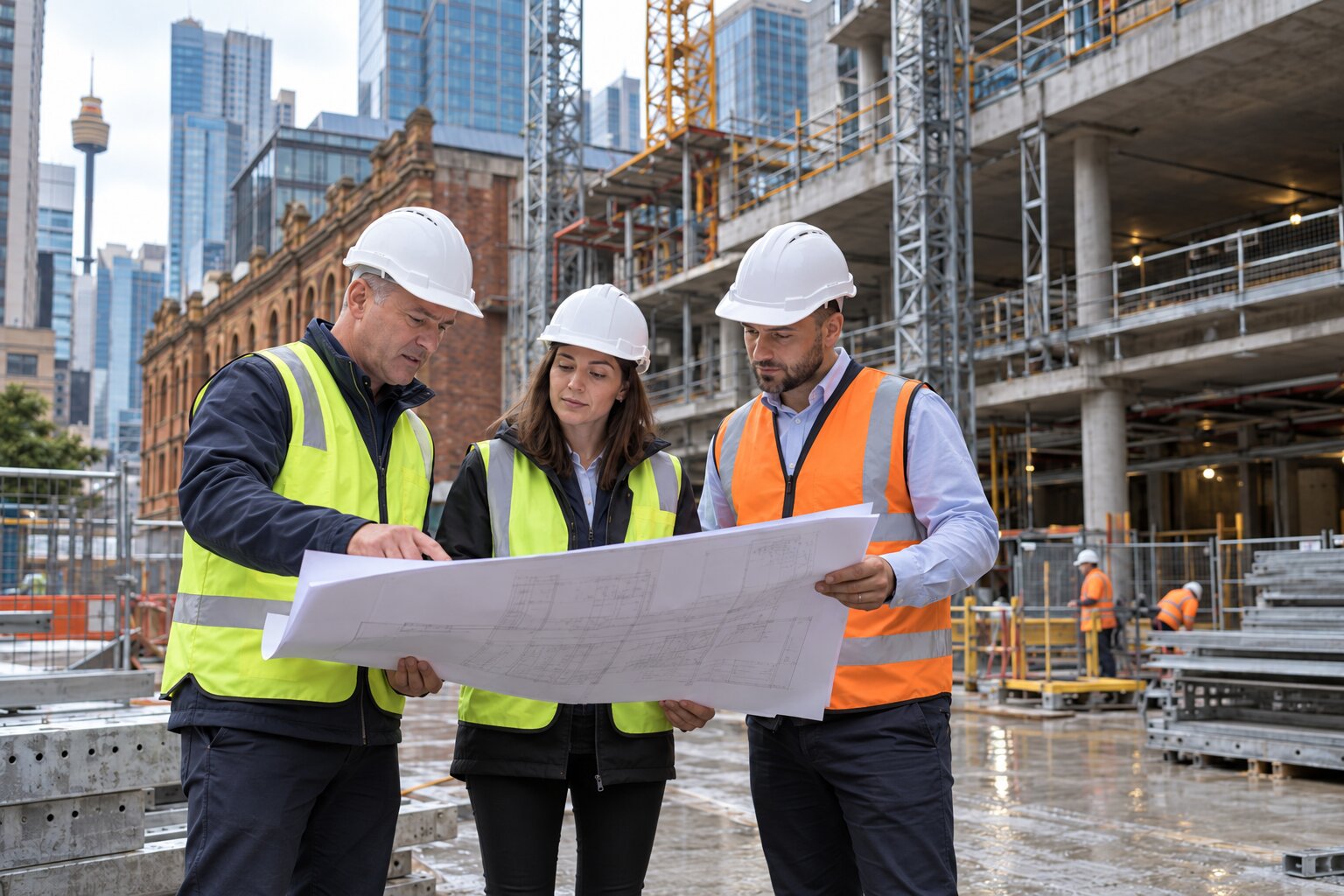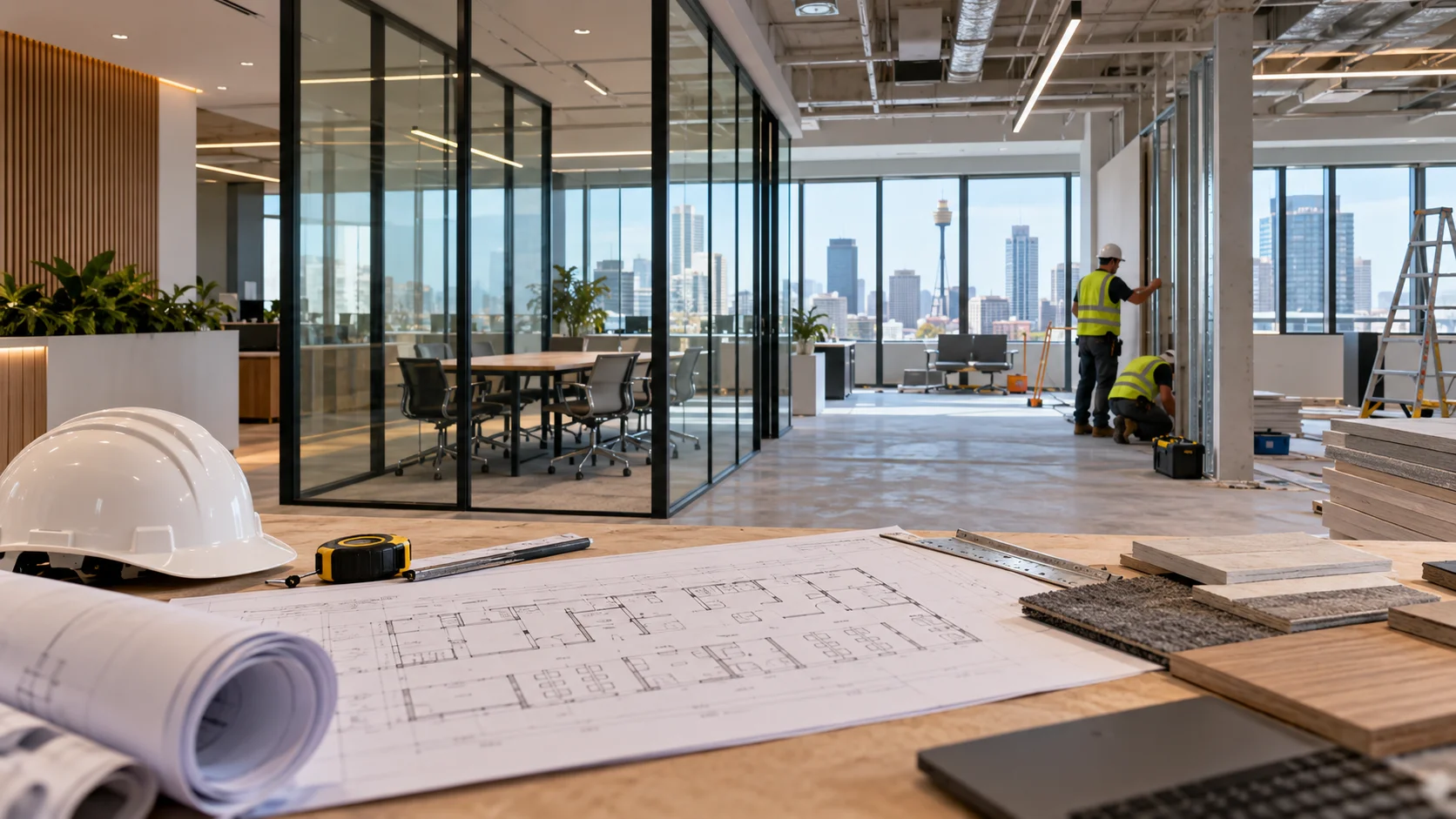

Live-environment construction executes building works while spaces remain fully operational. At Tau Constructions, we deliver commercial refurbishments and live-site construction management across Sydney’s occupied buildings without shutdown. Live delivery shifts contractor safety to public safety management, requires noise scheduling with time-boxed windows, demands HEPA filtration and negative pressure zones, replaces traditional logistics with just-in-time coordination, and transforms builders into facility hosts managing stakeholder communication.
This high-stakes discipline demands meticulous planning, risk control, and coordination. Here’s what shifts when buildings stay occupied.
The 5 Critical Shifts in Live Construction
Construction in operational buildings represents a complete reframe of logistics, responsibility, and risk. At Tau Constructions, we approach live environment construction through five critical shifts protecting people, performance, and business continuity.
From Contractor Safety to Public Safety
On vacant sites, safety protocols manage risks around workers. In live environments, staff, tenants, customers, and the public become part of the risk matrix. This requires segregation zones with physical barriers, secure hoardings with controlled access, egress planning and maintaining emergency pathways per NCC requirements, clear visual signage meeting accessibility standards, and emergency response integration coordinating with fire wardens and security personnel.
Public safety planning begins during pre-construction. Every construction management plan includes layered protection protocols aligning with Work Health and Safety regulations and real-time occupancy patterns, preventing incidents and maintaining stakeholder trust.
Noise and Vibration Scheduling
Live environments amplify disruptions. Hammer drills, jackhammers, or heavy deliveries derail office productivity or compromise patient care. Tau Constructions employs time-boxed loud work windows (restricting demolition to after-hours), night or early-morning shifts for ceiling removal and mechanical installations, silent zones around boardrooms or operating theatres using sound-dampening measures, and real-time communication issuing advance notifications via building apps and bulletins.
In a recent commercial fitout project, our team worked after hours to deliver ceiling grid upgrades without disturbing adjacent tenancies, maintaining building functionality and tenant satisfaction.
Dust, Air Quality, and Health Protocols
In healthcare facilities, aged care, and food service operations, air quality is non-negotiable. Construction dust or VOCs compromise occupant health and trigger regulatory violations. Tau’s live delivery plans integrate HEPA-filtered air scrubbers, capturing airborne particles, negative pressure zones, creating pressure differentials preventing contamination spread, dust containment barriers using floor-to-ceiling polyethylene sheeting, and clean-to-dirty pathway controls with boot washing stations.
These measures enable compliant, uninterrupted operations during construction across healthcare and aged care projects.
Just-in-Time Logistics
Space constraints multiply in live environments. Loading docks serve multiple tenancies, laydown zones accommodate minimal storage, and movement must remain coordinated. Tau Constructions adjusts delivery workflows using after-hours material drops during low-occupancy periods, micro-scheduling of trades, coordinating arrivals with material deliveries, internal elevator coordination booking goods lifts during designated windows, and zoned access passes restricting trade access to approved areas only.
Our construction management team works closely with building managers to prevent bottlenecks, maintain access compliance, and minimize disruption while adhering to timelines.
Shift in Communication Role
Builders transition from contractors to facility hosts, managing stakeholders including tenants, building managers, security, and occupants. Tau Constructions assumes hosting responsibilities: occupant notifications, distributing advance notices detailing work type and timing, wayfinding signage directing occupants around construction zones, safety inductions for adjacent stakeholders covering emergency procedures, and regular tenant updates through coordination meetings.
This communication infrastructure is under operational control. When delivering within someone else’s environment, communication becomes risk management, preventing conflicts from escalating to disputes.
Why Live Construction Requires a Specialist Framework
Delivering projects in live environments means managing complex risks across people, property, and regulatory compliance. Tau’s framework integrates Early Contractor Involvement, engaging during the design phase to identify risks and improve feasibility, staged delivery planning dividing sites into operational and construction zone,s enabling phased works, compliance mapping aligning to NCC, DBP Act, and WHS requirements from pre-construction, stakeholder alignment plans identifying impacted users through occupancy audits, and director-led site oversight ensuring accountability isn’t delegated.
This delivers certainty where failure triggers business interruption claims, regulatory penalties, or reputational damage.
Timelines, Costs, and Quality
Time: Live construction takes longer due to after-hours constraints, sequencing delays, and coordination requirements, but it eliminates downtime losses, including relocations and business closures.
Cost: Live projects carry additional costs for labour (night shift premiums), environmental controls (hoarding, HEPA scrubbers, barriers), and project management (coordination hours), but protect revenue streams and reduce business risk. For asset managers and tenants, shutdown costs often outweigh live delivery premiums.
Quality: Inexperienced builders rush work or compromise finishes. At Tau, every live project receives director-led oversight, maintaining Tier 1 finish quality, full compliance documentation, and trade coordination without compromise. Live means greater control, planning, and accountability.
Regulatory & Compliance Requirements
In live environments, compliance becomes a foundational strategy. Tau Constructions embeds Work Health and Safety Act requirements around site segregation and egress, NCC Class 2 standards for residential upgrades during occupancy, Design and Building Practitioners Act, ensuring registered practitioners on regulated projects, lease compliance for end-of-lease make-good works meeting contractual obligations, and fire safety maintained 24/7 through temporary pathways and emergency lighting.
For healthcare or aged care, Tau Constructions integrates infection control protocols, air quality management plans, and noise suppression measures, protecting patient environments.
Who Needs Live Environment Construction?
Commercial Office Tenants: Avoid relocation costs during upgrades or make-good works.
Healthcare Facilities: Maintain clinical operations while upgrading infrastructure without compromising patient safety.
Educational Institutions: Time upgrades during holidays or stage works during term using acoustic controls.
Retail and Hospitality: Keep trading while modernizing brand presentation or back-of-house functionality.
Government Assets: Deliver upgrades without interrupting essential services.
Tau Constructions has delivered live environment projects across all these sectors, proving high-performance construction doesn’t require disruption.
Real Projects: Tau Constructions in Action
Humble Bakery, Sydney: Tau Constructions delivered a full hospitality fitout in an active precinct, coordinating early-morning access and silent internal works. No complaints. No downtime.
499 Kent Street, Sydney: Engaged during Early Contractor Involvement, Tau Constructions planned sequencing for hotel development, maintaining partial occupancy during service upgrades.
These projects reflect Tau’s approach: tenant engagement from day one, director oversight on site, risk controlled at every stage.
Planning a Live Construction Project
Live delivery succeeds during the planning phase, months before site establishment:
Engage Early: Choose a builder like Tau Constructions with demonstrated live environment experience through verifiable project portfolios.
Map Stakeholders: Identify everyone affected, owners, managers, tenants, security, visitors, documenting operational hours and impact tolerance.
Define Zones: Plan phased delivery, separating construction zones from operational zones, maintaining emergency egress and services.
Build a Communication Plan: Proactively inform occupants using multi-channel communication distributed before and during works.
Confirm Compliance: Engage certifiers, WHS consultants, and fire engineers early for regulatory approvals.
Schedule Around Users: Maximize quiet periods, coordinate off-hours access, and plan staged handover milestones.
Document Everything: Record approvals, agreements, incidents, and certificates. Documentation equals protection.
Why Choose Tau Constructions
When buildings can’t stop operating, construction becomes riskier. Live-environment delivery requires licensed builders as strategic partners. Tau Constructions brings experience across commercial offices, healthcare facilities, educational institutions, retail spaces, and government buildings; compliance expertise integrating WHS, NCC, and DBP Act requirements; and director-led oversight maintaining accountability.
Whether managing commercial fitout, compliance-driven refurbishment, or healthcare upgrade, Tau Constructions is Sydney’s trusted partner for live environment construction executed to Tier 1 standards.
Contact Tau Constructions to discuss your project or learn about our construction management approach.