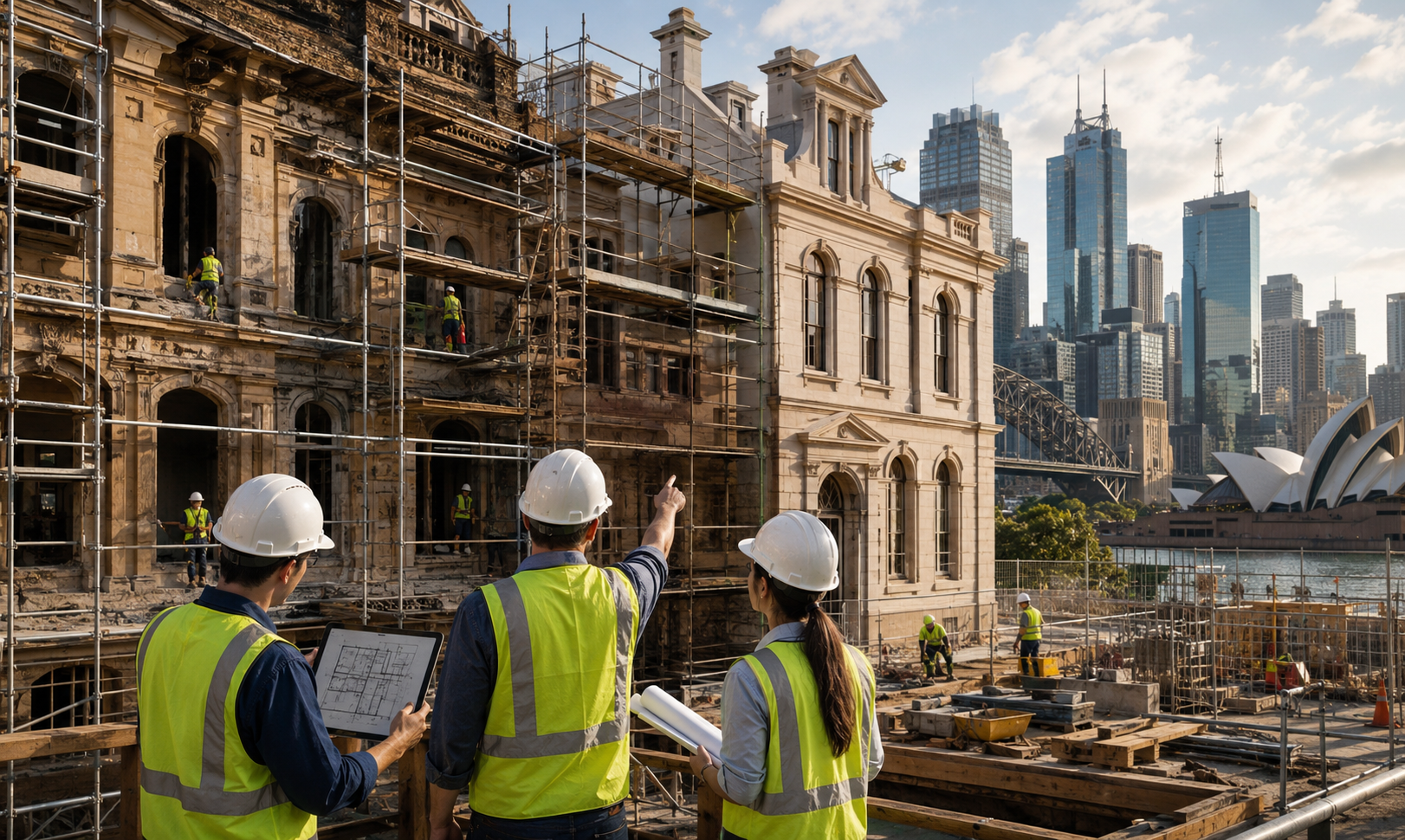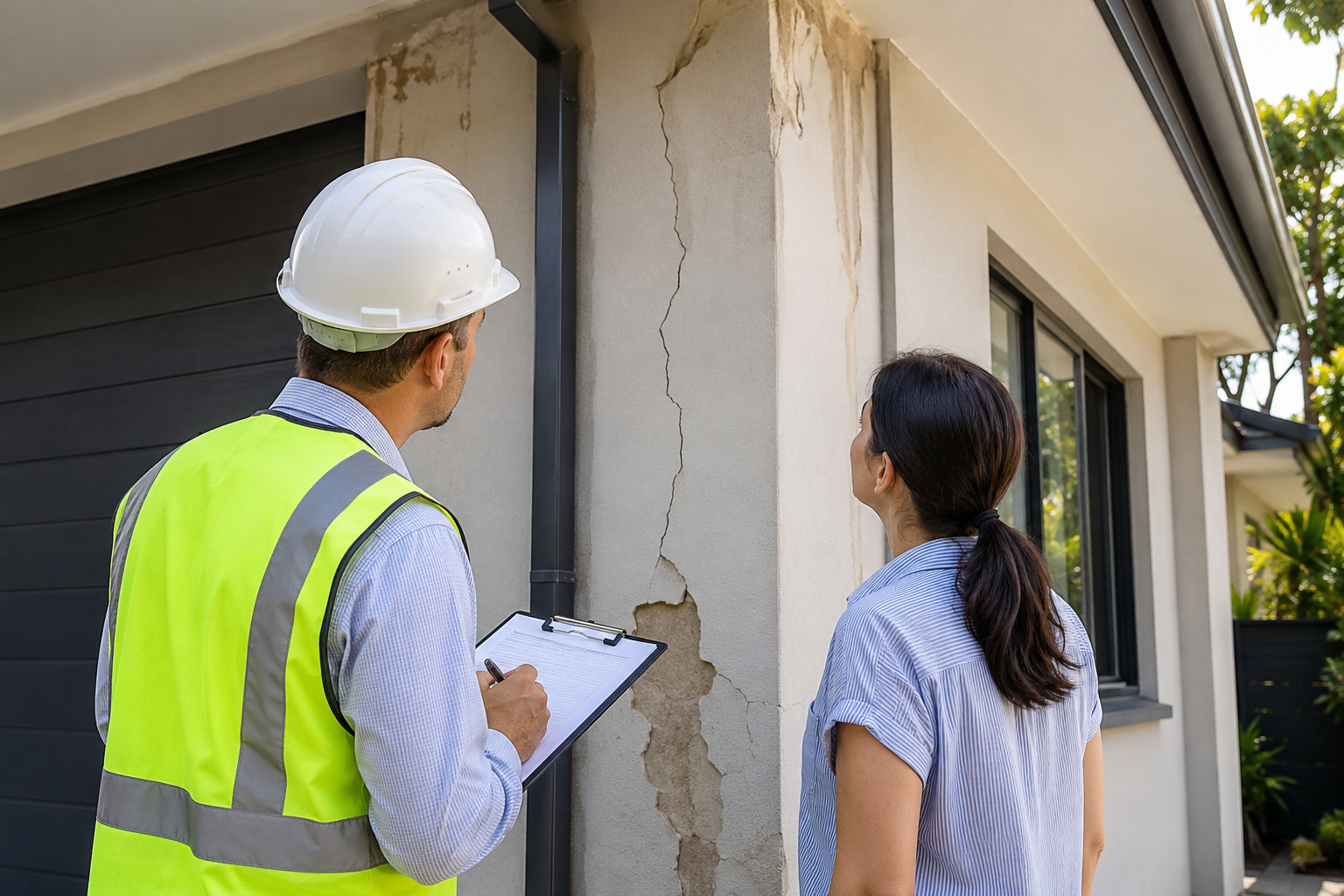

Live environment refurbishment delivers building upgrades while tenants continue operating, replacing the full-shutdown model with staged works, controlled sequencing, and disciplined communication protocols. The approach allows commercial property owners, asset managers, and hospitality operators across NSW to upgrade buildings without losing rental income or trading days.
Tau Constructions has delivered live environment refurbishment on Ace Hotel Lobby & Bar and Kiln Restaurant in Sydney CBD, where the venue continued trading throughout the build. Director-led delivery and a five-person senior team make real-time staging and sequencing decisions on site rather than escalating through a project management chain.
Why Live Environment Delivery Requires a Different Construction Approach
Live environment delivery is the construction approach used when refurbishment work happens in an occupied building that continues operating throughout the build. Tenants stay in place. Hospitality venues keep trading. Office workers keep working. The structural difference between live environment delivery and standard refurbishment is that every site decision must account for occupant impact in addition to construction logic.
Standard commercial refurbishment with the building empty allows the contractor to optimise for cost and speed alone. Live environment delivery introduces a third constraint, operational continuity. The site programme is built backward from when the building can tolerate noise, dust, traffic, and access restrictions, not forward from when trades are available. Sequencing decisions are constrained by trading hours, shift patterns, and tenant lease provisions.
How Staging and Sequencing Minimises Disruption During Refurbishment
Staging and sequencing are the two structural mechanisms that allow refurbishment to proceed without disrupting tenants or operations. Both require senior judgment in real time on site.
Staging splits the works by zone
Staging divides the refurbishment into discrete physical zones that can be isolated from the operating building. One floor is closed and worked on while the rest of the building functions normally. One wing of a hotel goes offline while the remaining wings continue to receive guests. The construction zone is physically separated by hoarding, dust barriers, and acoustic protection.
Sequencing splits the works by time
Sequencing schedules disruptive work into the hours when the building can tolerate it. Demolition and high-noise work are sequenced to overnight hours in a hotel, weekends in an office building, or non-trading hours in a hospitality venue. Quiet finishing work runs during occupied hours.
The two work together. Effective live environment refurbishment uses both, staged zones, sequenced timing, coordinated by senior site management with authority to adjust the programme as conditions change. Construction management under a director-led delivery model makes these adjustments in hours, not weeks.
Communication Protocols That Keep Tenants Informed and Calm
Communication protocols are the third structural element after staging and sequencing. Without disciplined communication, tenants experience the works as random disruption.
Three communication elements are non-negotiable on live environment work. Advance notice of upcoming disruption — what, when, where, and how long — distributed before the works begin. Daily or weekly updates during active phases, depending on the disruption profile. A single point of contact for tenant queries, available during business hours. The single point of contact matters most. Tenants who can call one named person about a noise issue, an access concern, or a programme question stay calm. Tenants routed through a generic switchboard escalate quickly to building management complaints.
Communication protocols are written into the contract before works begin, not added when complaints arrive. The site programme builds in time for communication delivery alongside construction tasks.
Safety Management in Occupied Commercial Buildings
Safety management in an occupied building carries every standard construction site obligation plus a layer of obligations created by occupant presence. The construction zone interfaces directly with operating tenant space, public areas, fire egress paths, and shared services.
Three safety considerations dominate live environment refurbishment. Construction traffic must be separated from tenant traffic — separate entry points, separate goods lifts where possible, separate timing of material deliveries. Fire egress paths must remain clear and operational at all times, with any temporary changes documented and communicated to tenants and building management. Air quality and acoustic protection must keep dust, fumes, and noise within tolerable limits for occupied spaces, with monitoring throughout the build.
The site induction includes occupant-awareness protocols alongside standard construction safety briefings. Every trade entering site understands the building is operating, that occupants are present, and that the standard for behaviour reflects that reality. Tau Constructions operates under NSW Licence 321977C with ISO-aligned systems that govern these protocols across every commercial refurbishment project.
Tau’s Live Environment Track Record — Projects Delivered Without Shutdowns
Tau Constructions has delivered live environment refurbishment across hospitality construction in Sydney CBD where the venue continued trading throughout the build.
Ace Hotel Lobby & Bar
The lobby and bar fit-out at Ace Hotel Sydney was delivered with bespoke joinery and custom fixtures while the surrounding hotel operated. Hotel guests continued checking in and using the building. The works programme was sequenced around hotel operating patterns and staged in zones that could be isolated from guest-facing areas.
Kiln Restaurant
Kiln Restaurant — the Level 18 rooftop restaurant and entertainment space at Ace Hotel — was fitted out as a venue addition to an operating hotel. The build had to deliver a 5-star hospitality fit-out at altitude on a building that continued running guest operations 18 floors below.
Humble Bakery
Humble Bakery received a full fit-out including commercial-grade kitchen and front-of-house finishes. The boutique bakery delivery shows the same staging and sequencing discipline applied at smaller scale.
These projects share a structural feature, director-led delivery means the Tau Constructions five-person senior delivery team made real-time programme decisions during the works. The same logic applies to commercial fitouts delivered with director involvement where the tenant is operating a business through the build.
When Full Closure Is Actually the Smarter Option
Live environment refurbishment is not always the right approach. Three situations make full closure the more economical and lower-risk option.
When the works require structural intervention that cannot be safely staged around occupants — replacement of major structural elements, large-scale slab penetrations, or major services replacement — full closure removes the safety burden and the access constraints. When the disruption profile of the works (extreme noise, dust generation, total power isolation) cannot be acoustically or environmentally controlled to a tolerable threshold, occupants will experience the build as effectively closed regardless. When the cost premium of staging, sequencing, and communication exceeds the cost of relocating tenants and closing the building, the economics favour full closure.
The decision is made at feasibility stage, not during the build. An honest feasibility assessment of whether the works can be delivered live, or whether closure makes more sense, is the first deliverable of commercial refurbishment with director-level engagement.
Frequently Asked Questions
What is live environment refurbishment?
Live environment refurbishment is commercial refurbishment delivered while the building continues to operate and tenants remain in occupation. The approach uses staging, sequencing, and communication protocols to deliver the works without forcing tenants to vacate or operations to shut down.
Can a hotel keep trading during a refurbishment?
A hotel can keep trading during refurbishment when the works are staged into zones that can be isolated from guest areas and sequenced around operating patterns. Tau Constructions delivered Ace Hotel Lobby & Bar and Kiln Restaurant on this basis.
How do you protect tenants from construction noise and dust?
Acoustic and dust barriers physically separate the construction zone from occupied areas. Disruptive work is sequenced into hours when the building can tolerate it. Air quality and noise are monitored throughout the build to keep occupied space within tolerable limits.
How long does live environment refurbishment take compared to a full shutdown?
Live environment refurbishment typically takes longer in calendar weeks than a full-shutdown equivalent because the works are constrained by occupant tolerance and operating hours. The trade-off is preserved rental income, continued trading, and avoided tenant relocation costs.
Live Environment Refurbishment Is the Operating Model
Live environment refurbishment is the approach Tau Constructions applies to commercial refurbishment, hospitality construction, and commercial fitout projects across NSW where the building must continue operating during the build. Bring us the problem, we’ll bring the solution.