Director-led construction delivery places a company director on every project from feasibility through handover, replacing the handoff sequence that separates design intent, construction execution, and operational outcomes. The model produces measurable differences in budget control, schedule certainty, and quality on Class 2 residential, commercial fitout, hospitality, and building remediation projects across NSW.
Tau Constructions operates this model under a five-person senior delivery team, with Director Nicholas Economos involved end-to-end on every project. The structural difference between director-led and traditional handoff delivery becomes most visible on complex projects where decisions require senior judgment in real time.
What Director-Led Construction Delivery Means
Director-led construction delivery is an accountability model in which a company director remains personally involved across every project phase, from feasibility through handover. The model is often confused with delivery contract types — Design and Construct (D&C), Integrated Project Delivery, or Construction Manager at Risk. These describe contract structures, not accountability. Director-led delivery operates across all of them.
The defining attribute is who holds the decision. Under a director-led model, budget, programme, and quality decisions are made by a single named director with direct visibility into every project phase. Constructability input at design stage, on-site judgment during construction, and handover sign-off all run through the same person.
The Problem With Traditional Project Handoffs in Construction
Traditional project handoffs separate design, construction, and operational handover into sequential phases handled by different teams, creating documented points of failure between each phase.
Five recurring handoff failure modes
Information gaps where context does not transfer with documents. Unclear ownership where no one carries forward the original decision logic. Siloed teams running on incompatible systems. Rushed transitions driven by deadline pressure. Scattered project data living across email threads and spreadsheets.
Regulatory exposure on Class 2 projects
Each handoff transfers responsibility to a team that did not generate the original decisions. On NSW Class 2 residential construction projects, this gap produces direct regulatory exposure. Constructability issues identified late trigger variation declarations under the DBP Act, which must reach the NSW Planning Portal within one day of the variation commencing on site. The handoff model is structurally adequate for repeatable, standardised projects. It produces the most friction on complex Class 2, hospitality, and remediation work.
How Direct Accountability Changes Project Outcomes
Director-level accountability shortens the decision path on construction projects from days or weeks to hours. A director on the project does not need to be briefed before deciding. Constructability input at design stage prevents variation declarations during construction because the senior judgment shaping the design is the same senior judgment that will carry the project through to handover.
Real-time problem resolution on site replaces escalation up a project management chain. A site issue that would normally travel from foreman to project manager to senior project manager to director resolves in a single conversation.
This decision velocity matters most on construction management under a director-led delivery model, where projects either run distressed or run efficiently based on how fast senior decisions can be made. It matters again on Early Contractor Involvement with director-level engagement, where senior judgment at pre-construction reshapes design choices in ways account-managed engagement cannot replicate.
Tau’s Director Involvement Model: Nicholas Economos on Every Project
Nicholas Economos remains involved end-to-end on every Tau Constructions project, from feasibility through to handover. The involvement is structural, not occasional — every project, every phase, no exceptions.
The five-person senior delivery team
The Tau Constructions director-led delivery team operates as a five-person senior structure: Nicholas Economos (Director), Ari Kammas (Project Coordinator), Chandan Patil (Site Manager), Aichlinn Trainor (Bid Manager), and Aaron James Moreno (Cost Estimator). Every senior team member reports directly to the Director. There is no intermediate management layer between site execution and director-level decision authority.
Proof at scale
Tau Constructions operates under NSW Licence 321977C with ISO-aligned systems. Ace Hotel Sydney — an 18-level, 264-room, 5-star hotel in Surry Hills, was delivered as a Tier 1–scale project executed under boutique operating model attention. 499 Kent Street, Sydney, a new 223-room, 5-star hotel currently in progress, runs as an Early Contractor Involvement engagement where Nicholas Economos is personally engaged at pre-construction.
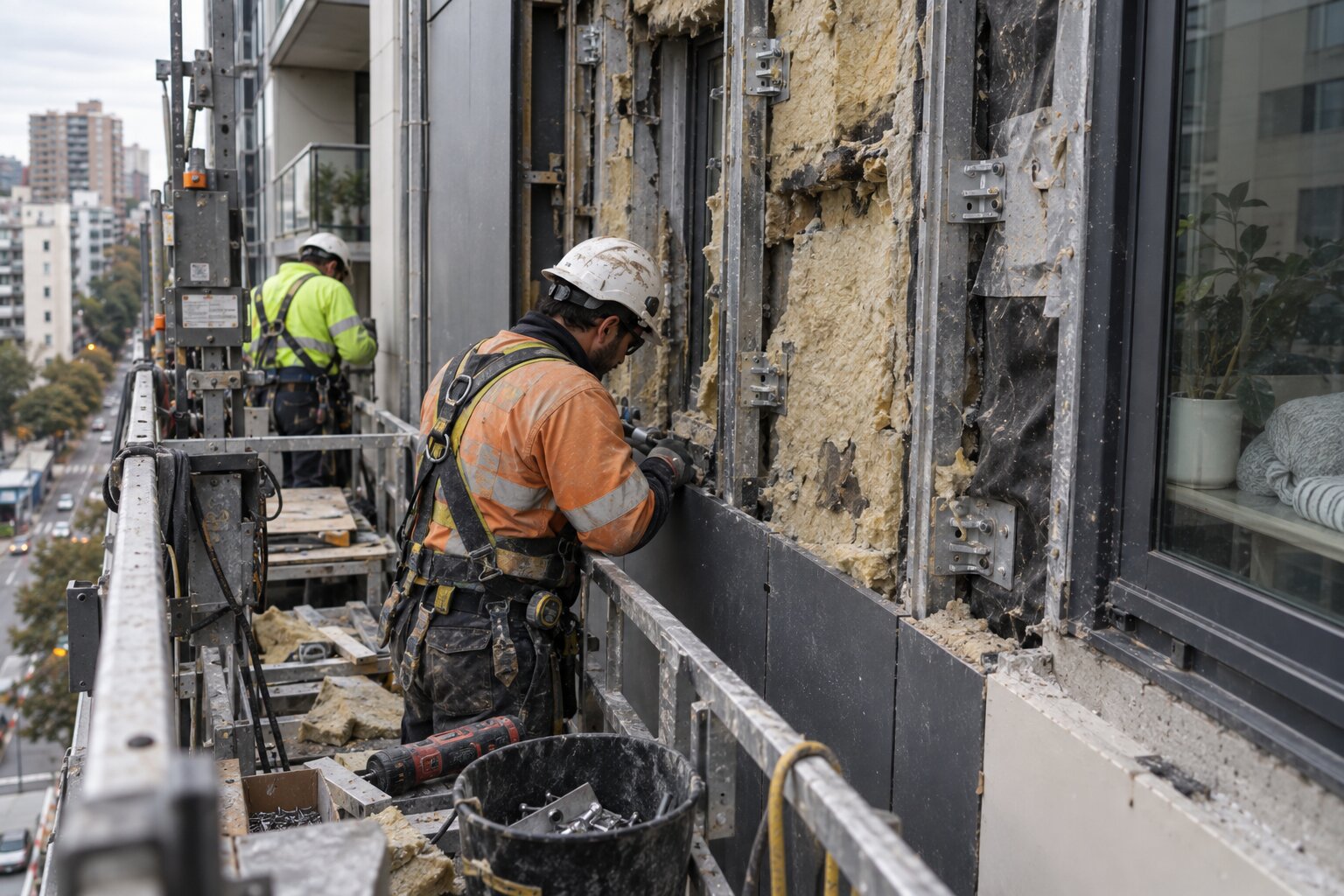
Combustible Cladding Projects represent the technical end, non-compliant façade replacement carrying direct DBP Act exposure, executed as building remediation with director-level technical judgment rather than delegated to a project manager working alone.
What Director-Led Delivery Means for Budget, Timeline, and Quality
Director-led delivery produces measurable differences in budget control, timeline certainty, and quality outcomes across Class 2 residential, commercial fitout, and building remediation projects.
Budget
The Cost Estimator and Bid Manager report directly to the Director. Cost decisions happen with full project context in the room, not through email approval threads winding through layers of approval. Budget escalation through layered chains is removed structurally — by team design, not by promise.
Timeline
Live-environment delivery capability is proven on Ace Hotel Lobby & Bar and Kiln Restaurant, the Level 18 rooftop fit-out at Ace Hotel. Both required refurbishment of an operating hospitality venue with minimal tenant disruption.
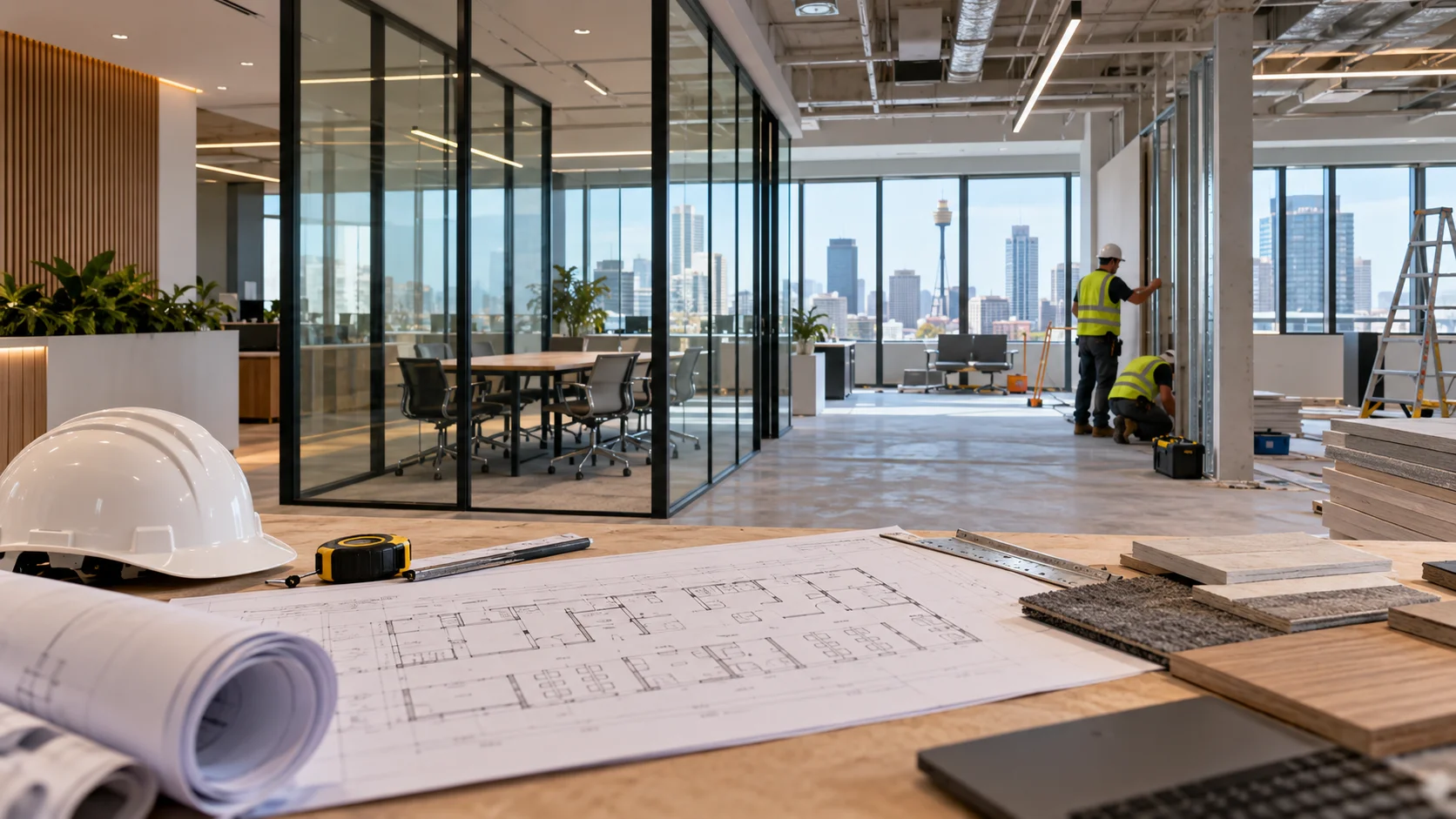
Director-level decisions on staging, sequencing, and trade coordination happen in real time on site. The model delivers commercial fitouts delivered with director involvement where programme certainty matters most. When the client is operating a business through the build.
Quality
ISO-aligned systems sit alongside NSW Licence 321977C scope. The Site Manager reports directly to the Director, so quality issues escalate to senior judgment in hours, not weeks. Combustible Cladding Projects were delivered to current BCA non-combustible material requirements. The same governance structure applies to Class 2 residential construction with director oversight, where DBP Act compliance and quality of execution are the same conversation rather than two separate processes.
What director-led delivery does not do
Director-led delivery does not substitute for trade competence, design quality, or sound feasibility input. It does not override NCC, BCA, or DBP Act compliance requirements. It strengthens compliance by placing accountable senior judgment at every decision point.
When “Account Manager” Means “Never Sees Your Site”
Tier 1 builders operate at a scale where directors cannot maintain personal involvement on individual mid-market projects. This is structural reality, not criticism. Tier 1 directors govern portfolios of $500M+ projects across multiple states. The arithmetic does not allow daily involvement in a 264-room hotel fitout or a 60-unit Class 2 building.
Tier 1 builders are correct for major infrastructure, mega-developments, and complex multi-stage CBD towers requiring 500+ person crews and multi-year programmes. For Class 2 developments, mid-scale commercial fitouts, hospitality construction, and combustible cladding remediation, the boutique operating model with director-led delivery produces tighter alignment between client intent and on-site execution.
Director-Led Delivery and the DBP Act: Why Builder Selection Now Functions as a Liability Decision
Section 37 of the Design and Building Practitioners Act 2020 creates a 10-year statutory duty of care that cannot be delegated or contracted out. Owners and owners’ corporations hold a direct cause of action for 10 years from the date of the Occupation Certificate.
Builder selection now functions as a liability-sharing decision alongside a price decision. A solvent registered Building Practitioner with director-level accountability presents a different liability profile than a phoenix-prone entity operating through layered project managers. Design compliance declarations, variation declarations on the NSW Planning Portal, and building compliance declarations form the evidence base for any future Section 37 claim. Director-led delivery produces tighter documentation discipline because the same senior person tracks decisions across the project lifecycle.
Frequently Asked Questions
What does director-led construction delivery actually mean?
A director-led construction delivery model places a company director personally on every project across every phase, from feasibility through handover. The director holds direct accountability for budget, programme, and quality outcomes rather than delegating to layered project managers.
How is director-led delivery different from Design-Build or Integrated Project Delivery?
Design and Construct and Integrated Project Delivery are contract structures. Director-led delivery is an accountability model that operates across all contract structures.
Why does director involvement matter on a construction project in NSW?
Section 37 of the DBP Act creates a 10-year statutory duty of care. Director-led delivery aligns with this regulatory environment by placing a named, accountable, registered Building Practitioner in the decision chain across the project lifecycle.
Does director-led delivery work on live-environment refurbishments?
Live-environment refurbishments are where director-led delivery produces the largest margin of difference. Real-time decisions on staging, trade sequencing, and tenant disruption require senior judgment on site. Tau Constructions has delivered live-environment refurbishment on Ace Hotel Lobby & Bar and Kiln Restaurant in Sydney CBD.
Director-Led Delivery Is the Operating Model
Director-led construction delivery is the operating model Tau Constructions applies to every project across Class 2 residential construction, commercial fitouts, commercial refurbishments, building remediation, and Early Contractor Involvement. For NSW developers and asset owners considering Class 2 projects, hospitality construction, or combustible cladding remediation, this is how Tau Constructions translates Tier 1 standards into boutique attention on every project. Bring us the problem, we’ll bring the solution.