Fire safety compliance for Class 2 buildings in NSW is governed by four regulatory instruments: the National Construction Code, the Design and Building Practitioners Act 2020, the Environmental Planning and Assessment (Development Certification and Fire Safety) Regulation 2021, and the Australian Standard AS 1851-2012.
Fire safety systems sit as a regulated design discipline under the DBP Act, requiring registered design practitioners to prepare and declare designs before construction starts. From 13 February 2026, AS 1851-2012 became mandatory for routine servicing of fire safety measures across all Class 1b to Class 9 buildings in NSW.
Tau Constructions delivers Class 2 residential construction and combustible cladding replacement projects across NSW where fire safety compliance is executed at the design stage, on site, and through handover documentation under Section 37 of the DBP Act.
What Fire Safety Compliance Means for Class 2 Buildings in NSW
Fire safety compliance for a Class 2 building in NSW is a system of integrated obligations across the building lifecycle, not a single document. The system covers design, construction execution, certification before occupation, and ongoing routine servicing once the building is occupied. Each phase carries documentation that must reach a defined regulator: design declarations to the NSW Planning Portal, the Fire Safety Certificate to the local council and Fire and Rescue NSW, and the Annual Fire Safety Statement lodged every 12 months thereafter.
Class 2 buildings carry the most stringent fire safety obligations in the NCC because they house sleeping occupants in multiple sole-occupancy units. The regulatory architecture reflects that risk profile.
The Regulatory Stack: NCC, DBP Act, EP&A Regulation, and AS 1851-2012
Four regulatory instruments govern fire safety compliance on Class 2 projects in NSW. Each instrument applies to a defined phase of the building lifecycle.
National Construction Code Volume One
The NCC sets the design provisions. Section C covers fire-resistant construction; Section D covers access and egress; and Section E covers services and equipment, including sprinkler systems, hydrants, and detection. Class 2 buildings of three or more storeys require Type A construction, the most stringent fire-resisting construction category. Buildings with an effective height above 25 metres require automatic fire sprinkler systems under the current Deemed-to-Satisfy Provisions.
Design and Building Practitioners Act 2020
The DBP Act treats fire safety systems as a regulated design discipline. Registered Design Practitioners must prepare regulated designs for fire safety systems, lodge design compliance declarations on the NSW Planning Portal before construction starts, and update declarations when variations affect a fire safety element. Fire safety engineering is a prescribed area of engineering under the Act, requiring practitioner registration.
EP&A (Development Certification and Fire Safety) Regulation 2021
The Regulation governs three documents: the Fire Safety Schedule listing every fire safety measure required for the building, the Fire Safety Certificate confirming installation before the Occupation Certificate, and the Annual Fire Safety Statement lodged every 12 months after occupation.
AS 1851-2012
The Australian Standard for routine servicing of fire protection systems. From 13 February 2026, AS 1851-2012 became mandatory across all Class 1b to Class 9 buildings in NSW. Building owners must ensure inspections occur at prescribed intervals, contractors signing off on inspections carry personal accountability, and physical fire safety logbooks are kept on site.
Fire Safety as a Regulated Design Discipline Under the DBP Act
Section 6 of the DBP Act identifies fire safety systems as a building element requiring regulated design. The consequence of a Class 2 project is structural. Every fire safety system on the building, sprinklers, detection, EWIS, hydrants, passive construction, fire doors, façade compliance, requires a regulated design prepared by a registered practitioner and a design compliance declaration lodged on the NSW Planning Portal before construction starts.
Section 37 of the DBP Act creates a 10-year statutory duty of care that cannot be delegated or contracted out. The duty extends to fire safety designs and installations. Owners and owners’ corporations hold a direct cause of action for 10 years from the date of the Occupation Certificate. The duty operates retrospectively, with fire safety work completed before 1 July 2021 sitting within the Section 37 exposure zone.
Developers selecting a builder for Class 2 work now treat fire safety compliance under the DBP Act as a liability-sharing decision alongside a price decision.
Active, Passive, and Management Fire Safety Systems on Class 2 Projects
Class 2 fire safety operates across three integrated system categories. Each category contributes to a single building fire safety system that protects occupants from the products of fire.
Active fire protection
Automatic fire sprinkler systems (required above 25 metres effective height), fire detection and alarm systems with interconnected smoke alarms, Emergency Warning and Intercommunication Systems (EWIS), fire hydrants and hose reels, and portable fire extinguishers.
Passive fire protection
Fire-rated walls and floors separating sole-occupancy units, fire-isolated stairs required where exits pass through more than three consecutive storeys, fire doors, and service penetration sealing under AS 4072.1 to maintain compartment integrity.
Management systems
Emergency lighting, exit signs, evacuation diagrams displayed in common areas, and a common-area Fire and Evacuation Plan managed by the owners’ corporation.
Fire Safety Schedule, Fire Safety Certificate, and Annual Fire Safety Statement
Three documents form the certification trail from design through occupation through ongoing operation.
The Fire Safety Schedule lists every fire safety measure required for the building and the standard each measure must meet. The Schedule is issued using the standard NSW Government template form mandated from 1 August 2023.
The Fire Safety Certificate confirms a properly qualified person has installed and checked every measure listed in the Fire Safety Schedule. The Certificate must reach the local council and Fire and Rescue NSW before the Occupation Certificate can be issued. For Class 2 buildings, the owner must provide a copy of the Fire Safety Certificate to the building practitioner issuing the building compliance declaration under the DBP Act.
The Annual Fire Safety Statement is lodged every 12 months after the initial Fire Safety Certificate. The Statement confirms an accredited practitioner under the FPAA accreditation scheme has assessed every fire safety measure against the Fire Safety Schedule. Failure to lodge on time produces escalating penalty notices and direct exposure to the local council and the Land and Environment Court.
How Builders Execute Fire Safety Compliance on Class 2 Projects
Fire safety compliance lives on paper until the head contractor turns it into installed systems. The execution work covers four areas.
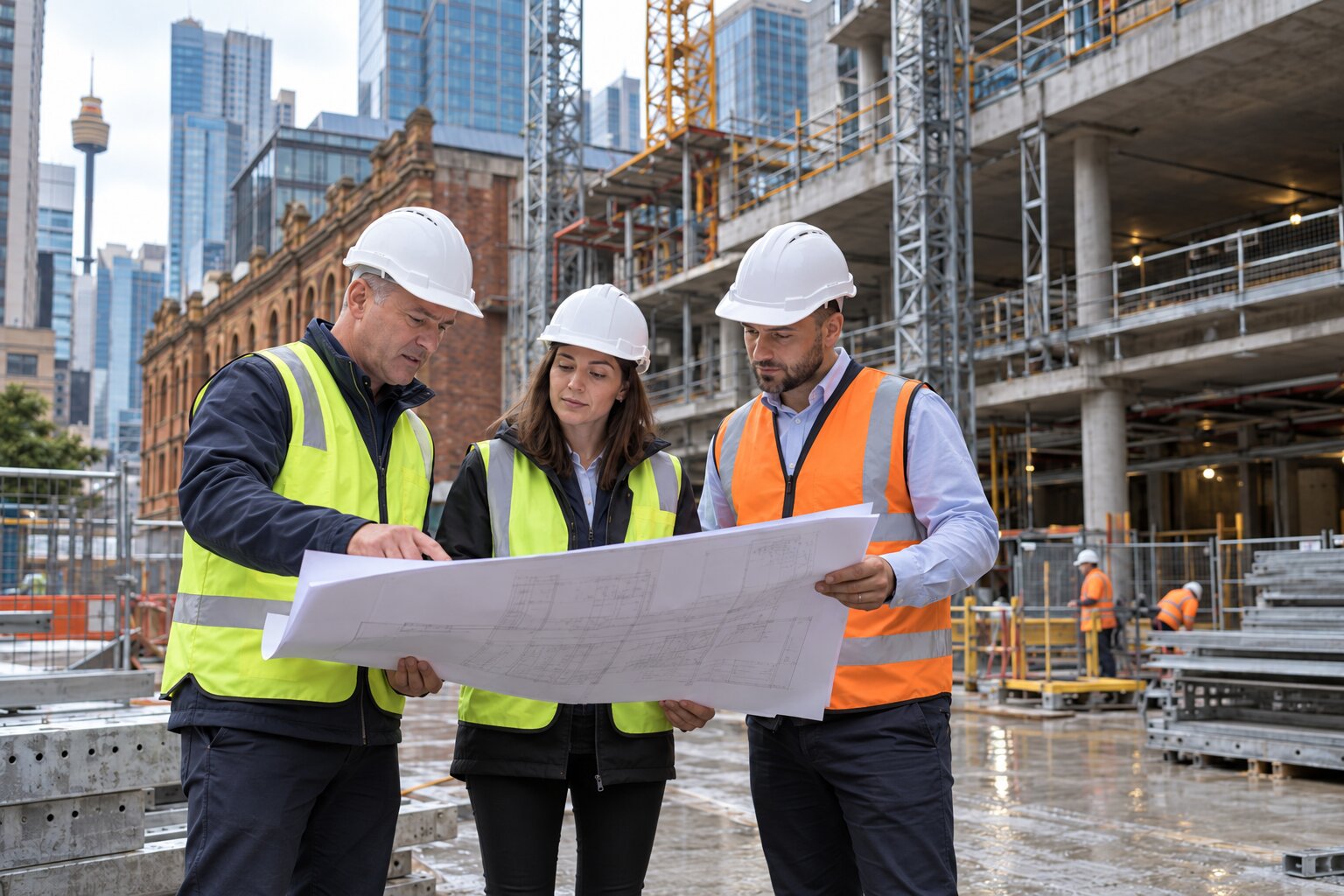
Coordination of fire safety practitioners. A Class 2 project carries a fire safety engineer, sprinkler installer, passive fire installer, certifier, and accredited practitioner. The head contractor coordinates the interface between these parties so the regulated design lands on site as installed work.
Variation discipline. Fire safety variations identified during construction trigger new regulated designs and design compliance declarations that must reach the NSW Planning Portal within one day of the variation commencing on site. The head contractor identifies the variation, manages the design update, and ensures the lodgement happens before work continues.
Documentation execution. The building compliance declaration lodged before the Occupation Certificate application confirms that the work was built in accordance with the declared fire safety designs. Documentation discipline during construction forms the Section 37 evidence base for the next 10 years.
Site execution. Service penetration sealing, fire door installation, sprinkler pipework, and façade fire compliance happen on site under head contractor supervision. Tau Constructions delivers Class 2 residential construction with fire safety compliance under the construction management of Class 2 fire safety execution, where the same senior delivery team carries the project from design coordination through certification.
Combustible Cladding Replacement as Fire Safety Remediation
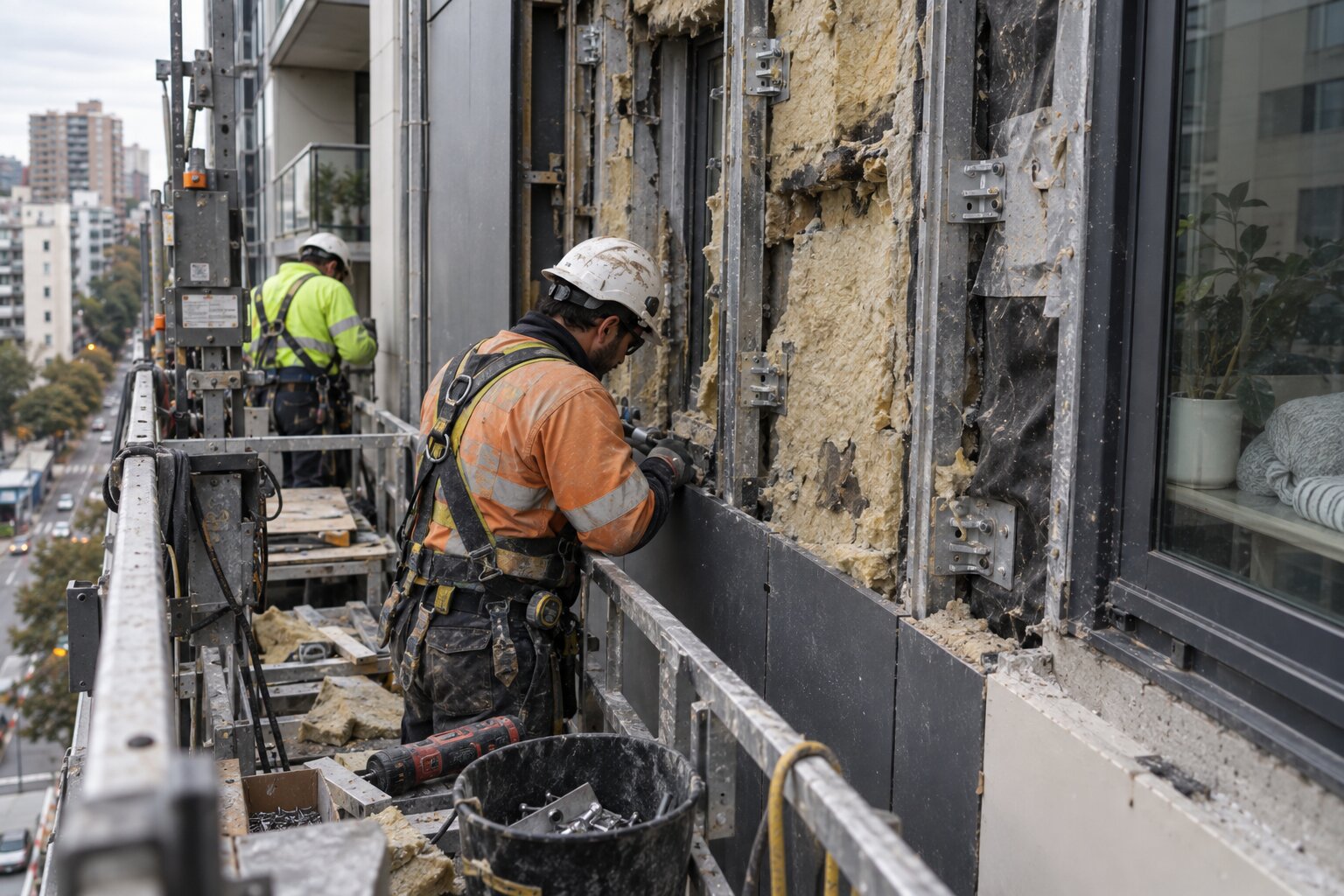
Combustible cladding replacement sits at the most visible end of fire safety compliance in NSW. Non-compliant façade cladding identified on existing Class 2 buildings post-2017 must be replaced with non-combustible materials meeting current BCA requirements. The work falls within DBP Act-regulated design obligations because façade compliance is a fire safety system.
Tau Constructions has delivered Combustible Cladding Projects, removing and replacing non-compliant façade cladding with compliant non-combustible materials. The work runs as building remediation, including combustible cladding replacement under director-led delivery, where the same senior team carries the project from feasibility through certification.
How ECI Reduces Fire Safety Variation Declarations
Fire safety variation declarations during construction are the highest-cost compliance event on a Class 2 project. Variations trigger new regulated designs, new declarations, and one-day lodgement windows on the NSW Planning Portal.
Early Contractor Involvement for Class 2 fire safety design reduces variation exposure. Constructability input at the design stage on sprinkler threshold decisions, passive versus active system mix, façade system selection, and service penetration coordination prevents variations during construction. The builder reviewing the regulated designs before declaration is the same builder executing the work on site.
Fire Safety Compliance Is a Construction Discipline
Fire safety compliance for Class 2 buildings in NSW operates as a construction discipline across design, execution, certification, and routine servicing.
Tau Constructions delivers Class 2 residential construction, building remediation, and combustible cladding replacement projects across NSW where fire safety compliance is treated as integrated work, not a separate deliverable.
Bring us the problem, and we’ll bring the solution.
Frequently Asked Questions
Who is responsible for fire safety compliance on a Class 2 building in NSW?
Responsibility is shared. Registered Design Practitioners prepare regulated designs and lodge design compliance declarations. The registered Building Practitioner lodges the building compliance declaration before the Occupation Certificate. The building owner lodges the Annual Fire Safety Statement every 12 months after occupation.
What is the difference between a Fire Safety Schedule and a Fire Safety Certificate?
The Fire Safety Schedule lists every fire safety measure required for the building. The Fire Safety Certificate confirms those measures have been installed and checked by a qualified person before occupation.
Does the DBP Act apply to fire safety remediation on existing Class 2 buildings?
Yes. The DBP Act applies to remedial building work on existing Class 2 structures, including combustible cladding replacement and fire safety system upgrades.
When does AS 1851-2012 apply to a Class 2 building?
From 13 February 2026, AS 1851-2012 became mandatory for routine servicing of fire safety systems across all Class 1b to Class 9 buildings in NSW.