Distressed construction projects in NSW rarely fail suddenly. Warning signs emerge weeks or months before formal acknowledgment across financial, scheduling, management, technical, and contractual indicators. External construction management intervention can stabilise and complete distressed projects through a structured three-phase process: rapid assessment in 5 to 10 days, stabilisation and recovery planning in the following two weeks, and execution through to handover.
NSW project principals carry direct exposure under Section 37 of the Design and Building Practitioners Act 2020 when a head contractor underperforms, making early intervention a regulatory consideration as well as a commercial one.
Tau Constructions delivers construction management and head contractor intervention across Class 2 residential, commercial, and remediation projects in NSW under NSW Licence 321977C, with Director Nicholas Economos involved in every assessment and recovery decision.
What Makes a Construction Project Distressed
A distressed construction project falls outside the nominal values defined in the project plan across budget, programme, or quality. The threshold is not absolute. A project running 10% over budget with a clear recovery path differs from a project running 25% over budget with a head contractor disengaged from the site and subcontractors threatening work stoppage.
The distinction between recoverable distress and terminal failure depends on two factors: how early the project principal acts after the warning signs emerge, and how deep the original delivery gap runs across documentation, programme, and trade coordination. NSW construction insolvencies have reached record levels through 2024 and 2025, making the gap between early intervention and missed window narrower than it was five years ago.
Six Warning Signs Your Project Is Heading for Failure
The signals appear in five categories. One indicator in isolation may reflect normal project friction. Three or more indicators across categories signal genuine distress.
Financial. Costs exceeding budget by 20% or more, cash flow disruption affecting subcontractor payments, payment disputes escalating between the head contractor and trades, and unapproved variations accumulating without lodged regulated designs.
Schedule. Delays exceeding 30 days without a documented recovery plan, missed milestone dates across multiple work areas, and an inability to provide realistic completion forecasts.
Management. Head contractor becoming difficult to reach, sudden changes to the senior project management team, inconsistent or incomplete progress reporting, and multiple subcontractors absent from the site.
Technical. Significant rework due to design errors or defects, unresolved RFI backlogs, building services coordination failures, and quality deficiencies requiring remediation.
Contractual. Subcontractor disputes or threatened work stoppages, suspension or termination notices issued, legal advisors engaged by either party, and insurance claims being prepared.
Regulatory. DBP Act variation declarations are not being lodged on the NSW Planning Portal within one day of the variation commencing, Building Commission NSW notices are issued, and design compliance declarations are missing from regulated designs.
How a Construction Manager Stabilises a Failing Project
External construction management intervention works through a defined sequence. The independent construction manager assesses the project against documented baselines, identifies root causes of the distress, and either oversees the existing contractor under enhanced supervision or takes over as a registered Building Practitioner to complete the work.
The distinction matters for NSW developers. Pure advisory firms can assess and recommend. Builders who hold NSW Licence 321977C and registration as a Building Practitioner can both assess and complete. The handover gap between assessor and completion contractor introduces additional risk on a project that already carries distress exposure.
The Recovery Process: Assessment, Stabilisation, Completion
Three phases structure the intervention.
Phase 1: Rapid Assessment (5 to 10 days)
Technical review covering engineering integrity, building services coordination, and compliance status. Schedule analysis establishing the critical path against the current state. Commercial audit covering contract terms, outstanding variations, cash flow projections, and cost-to-complete.
Organisational assessment of the existing project team and stakeholder relationships. Risk identification covering contractual exposure, regulatory gaps, and physical site risks.
The output is a diagnostic report identifying root causes and recovery feasibility.
Phase 2: Stabilisation and Recovery Planning (10 to 15 days)
Revised scope, schedule, and budget-to-complete prepared against the diagnostic findings. Cash flow stabilisation through enhanced project controls. Stakeholder alignment with the project principal, financiers, and trades. Where required, transition planning for head contractor changeover under the DBP Act.
The output is a recovery plan with milestones, realistic timelines, and an agreed commercial framework.
Phase 3: Execution and Completion
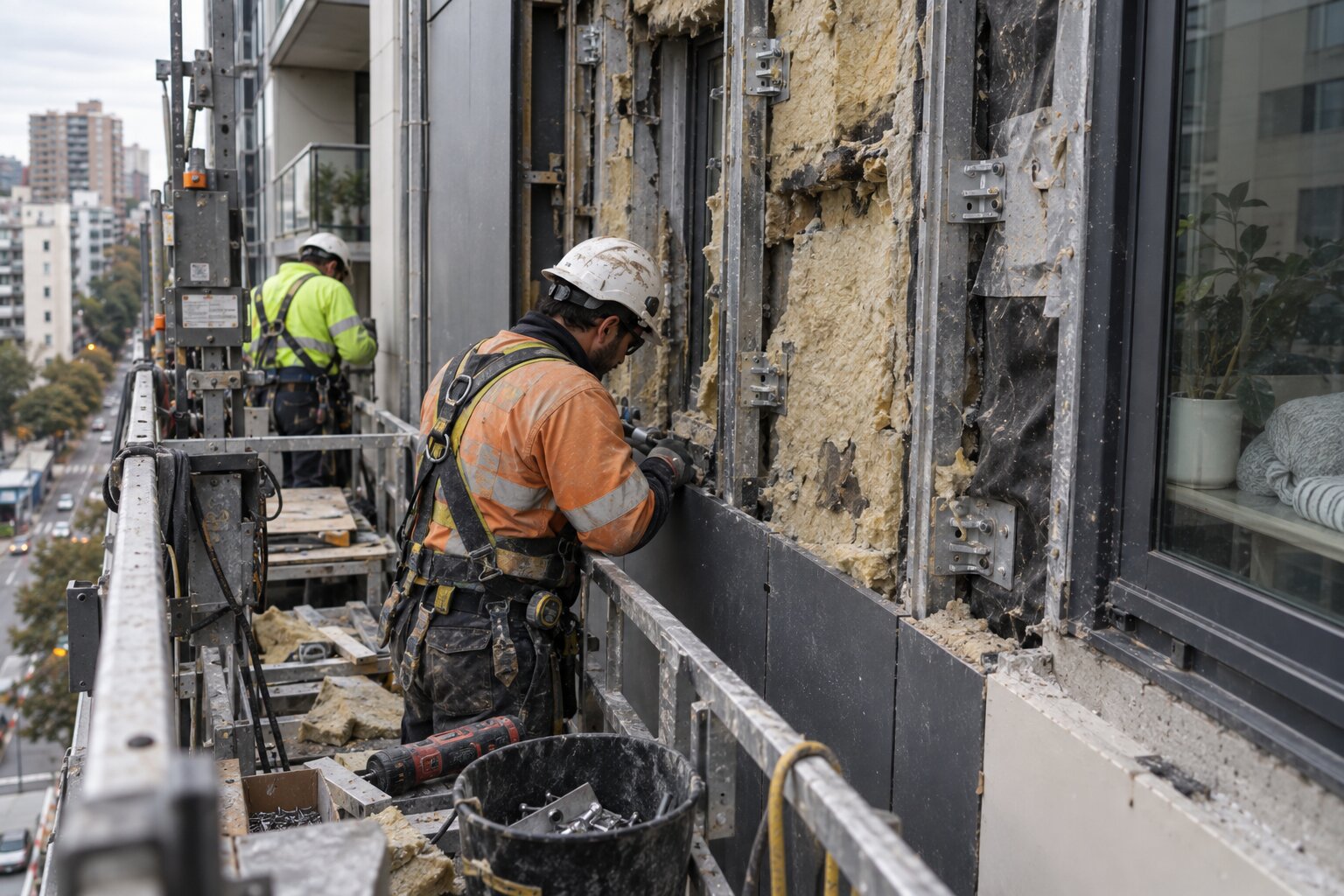
Construction management intervention on distressed projects delivered under enhanced controls. Weekly progress monitoring against recovery milestones. Variation declarations managed under the DBP Act lodgement discipline. Defect rectification coordinated alongside completion work. Where the scope includes physical remediation, building remediation work on distressed Class 2 projects runs alongside the recovery delivery.
The output is project completion with handover documentation supporting the building compliance declaration.
When External Construction Management Is the Right Call
Three scenarios make external intervention the commercially sound decision rather than the last resort.
The original head contractor shows financial distress, but the project has not yet stalled. Early intervention preserves contractor relationships and avoids the full cost of head contractor changeover. Early Contractor Involvement to prevent project distress on future projects becomes a structural prevention measure.
The project has stalled mid-delivery, with the original head contractor disengaged or insolvent. Intervention shifts from prevention to recovery. The incoming construction manager assesses the gap, restructures the delivery model, and either supervises a replacement head contractor or takes over the head contract directly under Design and Construct delivery as a recovery model.
DBP Act compliance gaps have emerged during construction. Missed design compliance declarations, late variation lodgements, or unsigned building compliance declarations create regulatory exposure that compounds with each week of delay. Recovery here is documentation-led before it becomes execution-led.
Why Director-Led Recovery Works When Project Handoffs Fail
Distressed projects require decisions in hours, not weeks. Documentation gaps need senior judgment because the assessment will hold up under future Section 37 scrutiny for 10 years from the Occupation Certificate. Contractor relationships under pressure require principal-level engagement to restructure.
Director-led delivery on distressed project recovery places Nicholas Economos directly inside the assessment and recovery decision chain. The same senior judgment that diagnoses the project carries through to completion, removing the handoff between recovery assessor and completion contractor that introduces additional risk on distressed work.
NSW Regulatory Considerations on Distressed Class 2 Projects
Three regulatory points reshape recovery work on Class 2 buildings in NSW.
Section 37 duty of care extends to the incoming builder. The new registered Building Practitioner takes on the duty of care for the completed work, including elements built by the original head contractor, where the incoming builder declares them under the building compliance declaration. Assessment depth at Phase 1 determines what the incoming builder will and will not declare.
DBP Act declaration continuity. Under DBP Act compliance during head contractor changeover, the incoming registered Building Practitioner must lodge the building compliance declaration covering the entire build, not only the recovery scope. Documentation gaps from the original head contractor become the incoming builder’s reporting responsibility.
Project Intervene. The NSW Government program resolves serious defects in the common property of residential apartment buildings up to 10 years old. Distressed projects nearing or past the Occupation Certificate may intersect with Project Intervene where defects emerge post-completion.
Distressed construction project recovery operates as an integrated construction discipline across assessment, stabilisation, regulatory continuity, and completion delivery.
Recovery Is a Construction Discipline
Tau Constructions delivers construction management, Class 2 residential construction, building remediation, and head contractor intervention across NSW, where recovery work requires the same senior judgment from assessment through to handover.
Frequently Asked Questions
What does “distressed” mean in construction?
A construction project becomes distressed when it falls outside the nominal values in the project plan across budget, programme, or quality, with no documented recovery path in place.
How long does a construction project recovery take?
Assessment runs 5 to 10 days. Stabilisation and recovery planning runs a further 10 to 15 days. Execution through to completion is variable, depending on the depth of the original delivery gap and the remaining scope.
Can the original builder be removed mid-project?
Yes, subject to the head contract terms, NSW Home Building Act provisions, and the DBP Act registered Building Practitioner requirements. Head contractor changeover requires the incoming builder to be registered and the design and building compliance declarations to be transferred or reissued.
Who is liable for defects when a new builder takes over a distressed project?
Section 37 of the DBP Act creates a 10-year statutory duty of care owed by every person carrying out construction work to current and subsequent owners. The duty cannot be delegated or contracted out. The incoming builder takes on the duty of care for work it declares under the building compliance declaration.