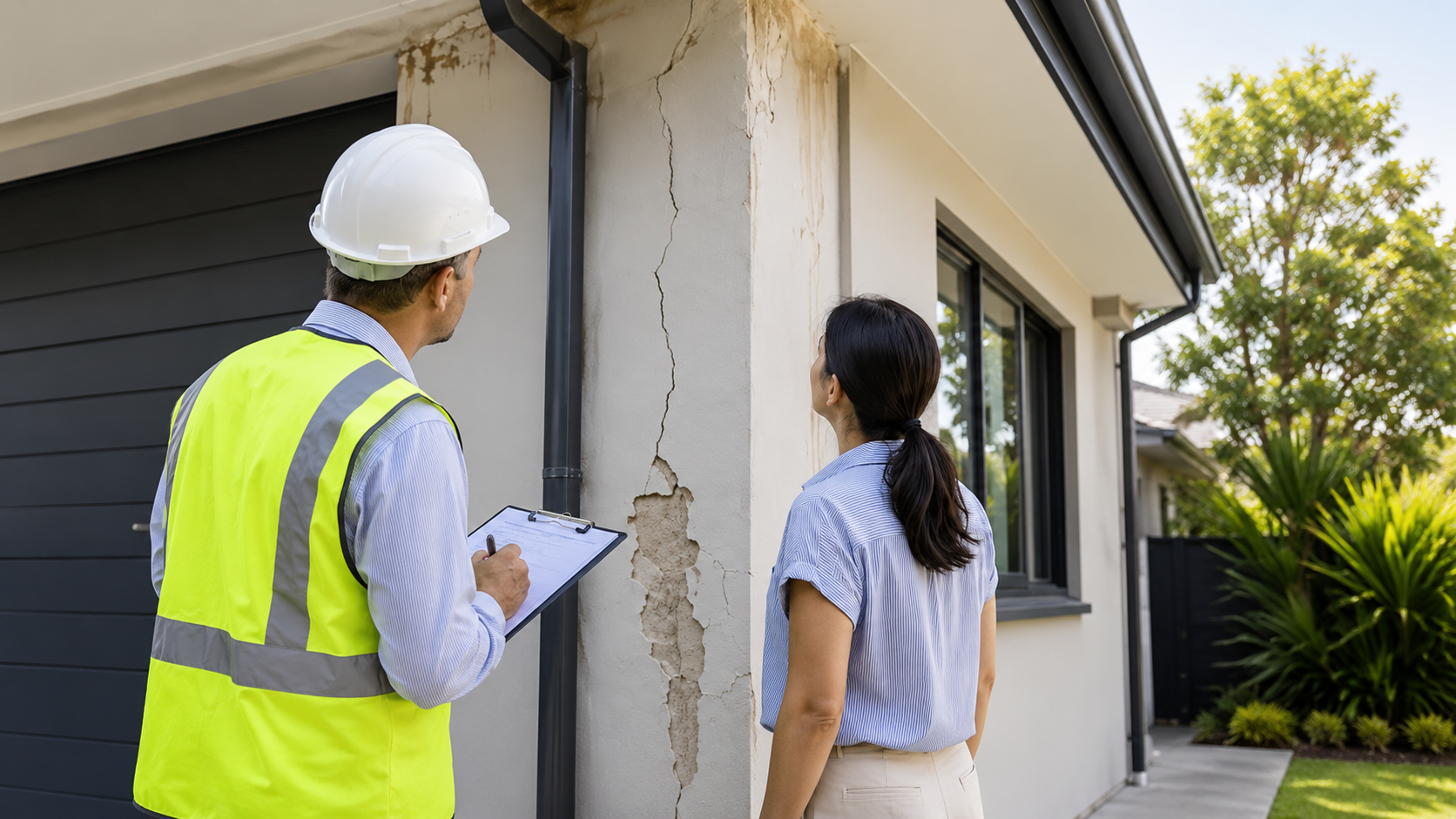
Building defects across NSW Class 2 apartments, commercial buildings, and multi-residential developments fall into seven recurring categories: structural cracking, waterproofing failure, concrete spalling, façade and cladding compliance issues, fire safety non-compliance, acoustic and thermal performance gaps, and foundation or subsidence problems.
Each category carries a different remediation scope, regulatory obligations under the Design and Building Practitioners Act 2020, and statutory warranty exposure under the Home Building Act 1989. NSW Building Commission research has documented serious defects in over half of recent strata buildings.
Tau Constructions delivers building remediation across structural strengthening, façade compliance, concrete cancer repair, and combustible cladding replacement projects in NSW under NSW Licence 321977C, with Director Nicholas Economos involved in every diagnostic and remediation decision.
How NSW Classifies Building Defects
NSW law splits building defects into two statutory categories under the Home Building Act 1989. Major defects carry a 6-year statutory warranty from the date of completion and cover failures in load-bearing components, fire safety systems, and waterproofing, defects that threaten structural integrity, habitability, or critical building element performance. Minor defects carry a 2-year statutory warranty covering finishes, fixtures, and non-structural workmanship issues.
The DBP Act layers a 10-year statutory duty of care on top through Section 37, extending civil exposure beyond the Home Building Act warranty periods. The Building Commission NSW maintains a Building Defects Library covering common defects across Class 2, 3, and 9c buildings under NCC 2022, used by certifiers, councils, and remediation contractors as the technical reference standard.
1. Structural Cracking
Structural cracking covers foundation movement, wall cracks wider than 5mm, beam failures, and load-bearing component deterioration. Causes include reactive clay soil movement common across Sydney, inadequate footing design, beam or column stress, and termite damage on timber structures.
Identification signs include stair-step cracking in brickwork, diagonal cracks running across walls or ceilings, doors and windows that stick or fail to latch, sloping floors, and gaps appearing between wall and ceiling junctions. Remediation requires structural engineering assessment, building remediation across structural, waterproofing, and façade defects including underpinning where foundations have moved, and carbon fibre or steel strengthening where load-bearing components have failed.
2. Waterproofing Failure
Waterproofing failure is the most reported defect category in NSW Class 2 buildings. Failed membranes in bathrooms, laundries, and kitchens allow water ingress into building frames. Balcony waterproofing failure creates the same outcome at façade level. Roof and gutter defects allow water into ceiling cavities and wall systems.
Identification signs include water staining on ceilings and walls, peeling paint, efflorescence (white powder residue on masonry), mould growth in wet areas, musty odours in adjoining rooms, and drummy tiles in showers and balconies. Remediation requires membrane removal and replacement, drainage correction, surface protection systems, and where damage has spread, structural component replacement before recovering the affected surfaces.
3. Concrete Spalling and Concrete Cancer
Concrete spalling occurs when steel reinforcement embedded in concrete corrodes, expanding within the concrete matrix and breaking the bond. Concrete cancer is the spreading, progressive form of concrete spalling. Both are common in coastal Sydney buildings exposed to salt and moisture, on older Class 2 balconies, and on support columns where chloride exposure accelerates corrosion.
Identification signs include visible rust staining on concrete surfaces, surface cracking with rust bleeding through, sections of concrete falling away from balconies or columns, and exposed reinforcement bars. Remediation involves removal of affected concrete, treatment of corroded reinforcement, application of corrosion-inhibiting coatings, and concrete reinstatement. Detailed remediation methodology is covered at concrete cancer repair across Sydney buildings.
4. Façade and Combustible Cladding Compliance Issues
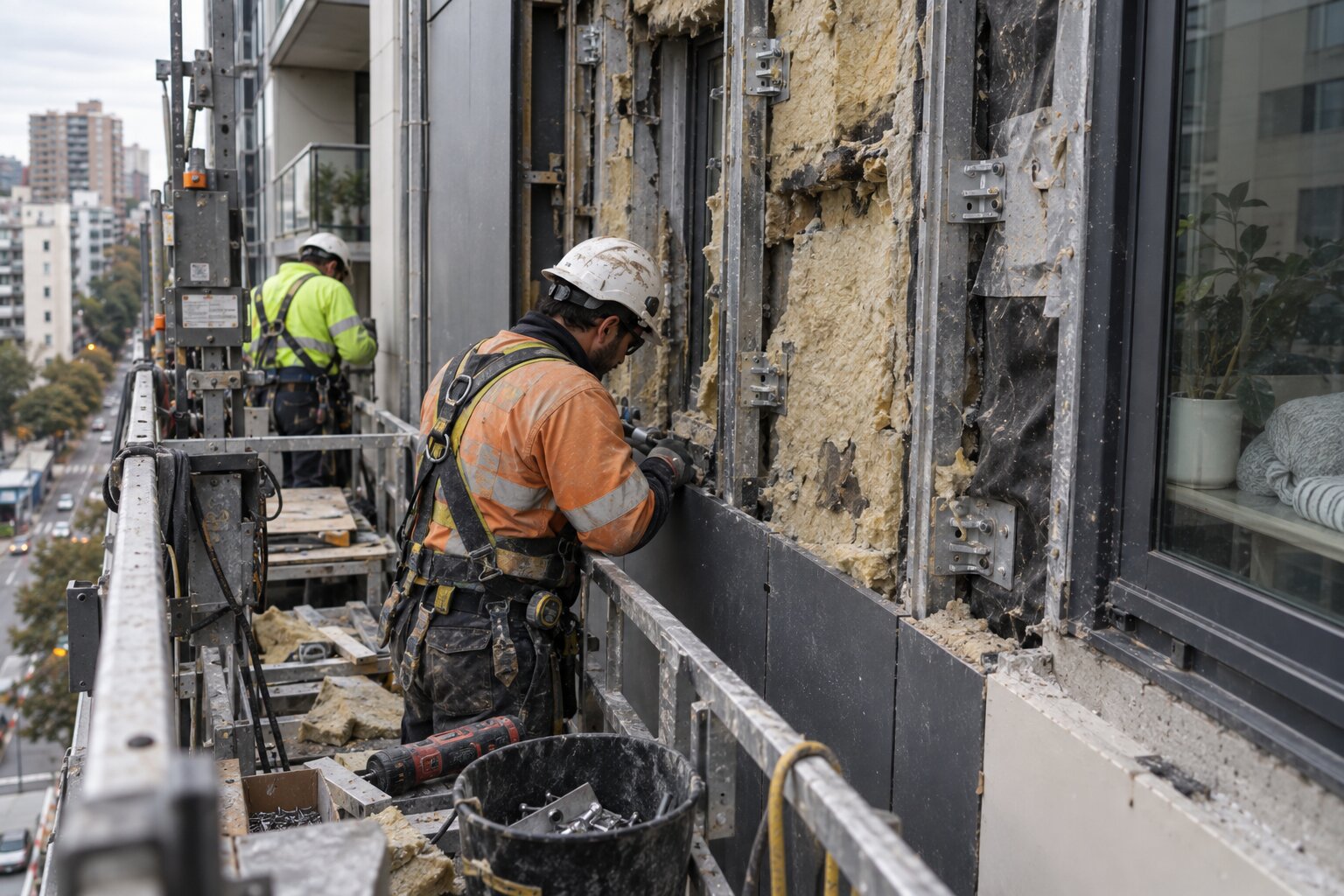
Façade defects cover non-compliant cladding identified through post-Grenfell regulatory reviews, façade deterioration over time, and weatherproofing failure at building enclosure level. Combustible cladding replacement remains a significant remediation category across NSW Class 2 buildings post-2017, with the NSW Cladding Product Safety Panel maintaining the regulatory framework.
Identification requires façade engineering assessment, NSW Cladding Taskforce registration review, and verification of cladding materials against current BCA requirements. Remediation involves removing non-compliant cladding and replacing with compliant non-combustible materials under DBP Act regulated design discipline. Tau Constructions has delivered Combustible Cladding Projects across NSW, removing non-compliant façade systems and replacing them with compliant materials under registered Building Practitioner declaration.
5. Fire Safety Non-Compliance
Fire safety defects affect approximately 17 to 24 percent of NSW Class 2 buildings according to Building Commission research. The defect category covers non-compliant fire doors, missing or damaged fire collars on service penetrations, inadequate sprinkler coverage, faulty detection and alarm systems, and Emergency Warning and Intercommunication System (EWIS) failures.
Identification signs include fire doors that fail to self-close or latch, hollow or damaged fire door frames, unprotected service penetrations through fire-rated walls, smoke detector failures during testing, and Annual Fire Safety Statement non-compliance findings. Remediation requires accredited practitioner assessment under the FPAA scheme, regulated design preparation under the DBP Act, and execution under fire safety compliance for Class 2 buildings under the DBP Act.
6. Acoustic and Thermal Performance Gaps
Class 2-specific defect category covering acoustic separation between sole-occupancy units under NCC Part F5, and thermal performance below BASIX requirements at completion. Causes include inadequate wall and floor acoustic construction, missing or compressed acoustic insulation, service penetrations breaking acoustic compartments, and thermal bridging across building elements.
Identification requires acoustic testing under AS/NZS 1276.1, occupant noise complaint patterns across adjoining units, and thermal performance verification against the BASIX certificate. Remediation involves acoustic ceiling and wall system upgrades, service penetration sealing, and thermal insulation correction. The work falls within DBP Act regulated design obligations on Class 2 buildings.
7. Foundation and Subsidence Issues
Foundation defects cover settlement, heave, and lateral movement affecting building stability. Reactive clay soils common across Sydney move with moisture variation, drainage system failures introduce water into foundation zones, and tree root infiltration disturbs soil structure adjacent to footings.
Identification signs include differential floor movement, structural cracking radiating from foundation lines, door and window misalignment progressively worsening, and external pavements lifting or settling against the building. Remediation requires geotechnical assessment, underpinning of affected footings, drainage system rectification, and tree management where root systems contribute to the movement.
How the DBP Act Applies to Defect Rectification on Class 2 Buildings
Remedial building work on Class 2 buildings sits within DBP Act-regulated work since 1 July 2021. The incoming registered Building Practitioner takes on the Section 37 duty of care for the rectification work declared under the building compliance declaration. Regulated designs prepared by Registered Design Practitioners cover the remediation scope. Variation declarations during rectification work require lodgement on the NSW Planning Portal within one day of the variation commencing.
Owners corporations and developers engaging remediation contractors verify registered Building Practitioner status before contract execution. The verification confirms that the incoming builder carries DBP Act registration covering the regulated work category. Tau Constructions delivers remedial building work on Class 2 structures under DBP Act compliance for multi-residential developers and the broader construction management of remediation works discipline.
Frequently Asked Questions
What is the difference between a major and minor building defect in NSW?
Major defects affect load-bearing components, fire safety systems, waterproofing, or other critical building elements where failure threatens structural integrity or habitability. The Home Building Act 1989 provides a 6-year statutory warranty for major defects. Minor defects cover finishes and non-structural workmanship under a 2-year warranty.
How long do building defect warranties last in NSW?
Six years for major defects and two years for minor defects under the Home Building Act 1989. The DBP Act Section 37 statutory duty of care extends civil exposure for defects to 10 years from the Occupation Certificate date.
Does the DBP Act apply to defect rectification?
Yes. Remedial building work on Class 2 buildings is regulated work under the DBP Act since 1 July 2021. From 1 July 2026, alteration and renovation work on existing Class 3 and Class 9c buildings also falls within the scope.
What is NSW Project Intervene?
A NSW Government program addressing serious defects in the common property of residential apartment buildings up to 10 years old. The program complements the regulatory framework for distressed Class 2 buildings.
Building Defect Rectification Is a Construction Discipline
Building defect rectification across the seven recurring categories operates as integrated construction work spanning structural strengthening, façade compliance, fire safety, and regulatory documentation under the DBP Act. Tau Constructions delivers director-led delivery on building remediation across Class 2 residential, commercial, and remediation projects in NSW.
Bring us the problem, and we’ll bring the solution.