
A quote without a documented scope prices assumptions, not a real project. Building condition, remaining lease term and unresolved compliance gaps set the actual scope of a refurbishment. Compliance approval depends on which specific works are planned, not on the word refurbishment itself. Comparing quotes only works when every builder prices the same documented scope. A site walkthrough before design begins clarifies the compliance pathway before money is spent.
A Quote Without a Documented Scope Prices Assumptions, Not a Project
A quote without a documented scope of works prices a set of assumptions, not an actual project.
Two builders can walk the same site and price two different jobs. Without drawings, specifications and a finish schedule, each builder fills the gaps with their own assumptions.
Gaps in scope surface on site mid-project, not before. Changes at that stage cost more and slow the program down.
What Sets the Scope Before Design Starts
Building condition, remaining lease term and outstanding compliance gaps set the real scope of a refurbishment before design work begins.
Building Condition Drives What Work Is Even Possible
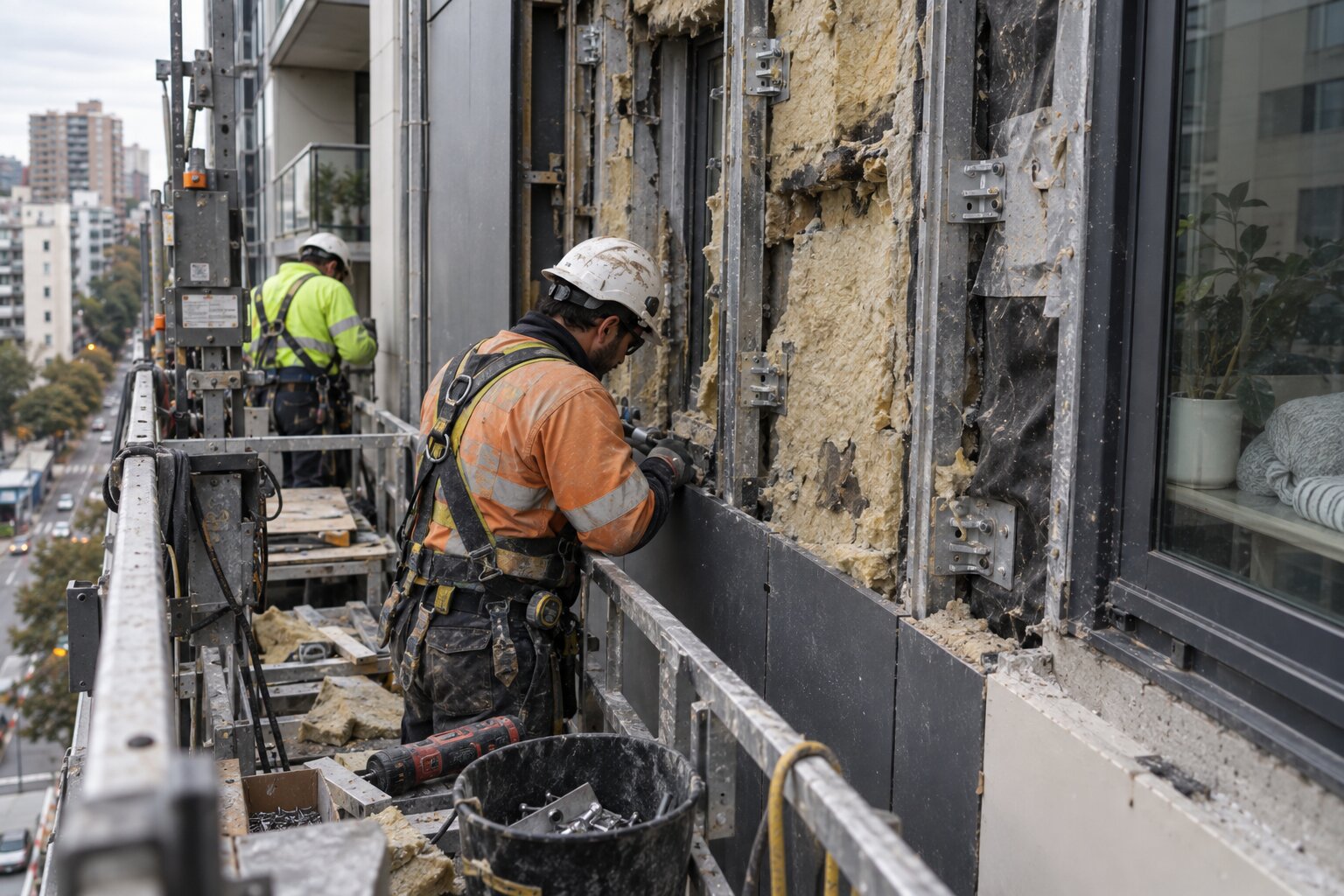
An existing building’s structure, services and finishes determine what a refurbishment can achieve. A dated services layout can limit design options regardless of budget.
A condition assessment before design starts flags these constraints early. Skipping this step risks a design the existing building cannot support.
Remaining Lease Term Changes What Is Worth Spending On
A short remaining lease term changes what refurbishment spend pays back over time. Heavy investment on a lease with limited time left rarely makes commercial sense.
Confirming lease term against planned spend belongs in the scoping conversation, not after design is complete.
Unresolved Compliance Gaps Belong in the Brief, Not a Surprise Later
Fire safety, accessibility and services compliance gaps often surface only once a builder inspects the site. Naming these gaps in the brief keeps them inside the original scope and budget.
Our guide to building defects in NSW covers the common issues that surface during a scoping inspection.
Compliance Approval Follows the Work, Not the Word Refurbishment
Compliance approval depends on the specific work planned, not on the label refurbishment attached to the project.
Cosmetic Work Is Usually Exempt From Formal Approval
Repainting and like for like flooring replacement generally sit outside formal building control approval. Cosmetic upgrades of this kind rarely change the compliance pathway for a project.
Structural, Fire Safety and Services Work Usually Is Not
Work affecting structural elements, fire safety systems, mechanical or electrical services typically requires formal approval before construction starts. Confirming which category each planned item falls into shapes both the timeline and the brief.
Why Two Refurbishment Quotes Rarely Price the Same Job
Two refurbishment quotes for the same building rarely price the same job unless both builders received identical documentation.
A builder pricing from a walkthrough alone fills scope gaps with assumptions about materials, finishes and inclusions. Another builder on the same site fills those same gaps differently.
Comparing two quotes built on different assumptions compares two different projects, not two prices for one project.
What a Documented Scope Needs Before It Goes to Quote
A documented scope needs drawings, specifications and a finish schedule before it goes to any builder for pricing.
Drawings Define Layout and Extent of Work
Drawings show what changes and where, room by room and system by system.
Specifications Define Materials and Performance Standards
Specifications set out exact materials, systems and the performance standard each element must meet.
A Finish Schedule Defines Every Space Room by Room
A finish schedule lists exactly what goes into every space, leaving no finish decision open to assumption at quote stage.
Full documentation shortens quote turnaround and reduces the assumption gap between competing builders. Our commercial fitout versus refurbishment breakdown helps confirm which project type the brief describes before documentation begins.
How to Compare Quotes Once Scope Is Locked
Comparing refurbishment quotes only works once every builder is pricing the same locked scope.
Confirm each quote’s GST treatment before comparing totals. Confirm if project management, compliance upgrades and furniture sit inside or outside the quoted figure.
A lower headline number built on a narrower inclusion list does not mean a cheaper project. A narrower scope produces a lower number for a smaller job, not the same job at a better price.
Walking the Site Before Committing to a Scope
A site walkthrough with a builder before design begins clarifies the compliance pathway before money is spent on drawings.
A walkthrough that categorises each planned improvement by type separates cosmetic work from work needing formal approval. Confirming this early prevents a brief built on assumptions the building cannot support.
When Refurbishment Scope Escalates Beyond the Original Brief
Refurbishment scope sometimes escalates once a builder opens up a wall, ceiling or floor and finds a condition the original brief did not anticipate.
Live or occupied buildings add sequencing complexity on top of any scope increase discovered mid-project. Our guide to refurbishing a commercial building without disrupting tenants covers how we manage that sequencing where the building stays operational.
Frequently Asked Questions
What does a commercial refurbishment scope of works need to include?
A complete scope includes drawings, specifications and a finish schedule covering every space affected by the works. Compliance items identified during a site inspection belong in the same document.
Why do commercial refurbishment quotes vary so much between builders?
Quotes vary because builders fill undocumented scope gaps with different assumptions about materials, finishes and inclusions. A locked, documented scope removes most of that variance.
Does a commercial refurbishment always need council approval?
No. Approval depends on the specific work involved. Cosmetic upgrades are generally exempt, while structural, fire safety and services work usually requires formal approval.
Key Takeaways: Locking Scope Before You Request a Quote
A locked, documented scope is what turns a refurbishment quote into a real number instead of a guess.
Tau Constructions scopes refurbishment projects against building condition, lease term and compliance requirements before pricing begins. Our commercial refurbishment service outlines how we document scope so every quote compares like for like.