
Early Contractor Involvement (ECI) is a construction procurement model where the builder joins during design, not after, to advise on cost, buildability, risk, and program before construction begins. The two-stage ECI process separates pre-construction services from construction delivery, giving developers full transparency over trade pricing, methodology, and risk allocation.
Australian developers use ECI to lock in cost certainty, reduce variation claims, and accelerate delivery on complex builds. In 2025–26, with material volatility, labour shortages, and elevated builder insolvency rates across the market, early contractor engagement has moved from a niche procurement strategy to standard risk management for projects with any complexity.
What Is ECI in Construction?
Early Contractor Involvement is a procurement model that brings the builder into the project at concept or schematic design, typically when design sits at 30–50% completion. The contractor advises on buildability, cost planning, construction methodology, and risk identification while the architect and consultants continue developing the design.
ECI sits between traditional lump-sum tendering and Design & Construct (D&C). Under a traditional tender, the builder receives a finished design, prices it, and builds it, with zero input on constructability. Under D&C, the contractor takes responsibility for both design and construction. ECI occupies the middle ground: the builder contributes construction intelligence during design, but design responsibility stays with the client’s consultants.
The model operates through two contractual stages. Stage 1 covers pre-construction services on a fee basis. Stage 2 converts to a construction contract, typically a Guaranteed Maximum Price (GMP), D&C arrangement, or lump sum, once scope, pricing, and methodology are agreed.
How the Two-Stage ECI Process Works in Australia
The ECI process separates pre-construction advisory work from construction delivery through two contractual stages with defined outputs and governance.
Stage 1: Pre-Construction Services covers the advisory phase, where the builder works alongside the design team:
- Site assessment and feasibility, evaluating access, services, infrastructure, geotechnical conditions, and demolition scope
- Open-book cost planning, elemental estimates based on real trade package pricing, not inflated lump-sum allowances
- Buildability reviews, identifying construction conflicts in cladding, structural connections, and services coordination before they reach the site
- Risk register development, collaborative workshops, mapping design, program, compliance, and site-specific risks
- Program development, critical path analysis with early procurement of long-lead items (structural steel, lifts, specialist systems)
- Authority consultation, DA coordination, NCC compliance pathways, and DBP Act obligations for Class 2 builds
- Value engineering, proposing alternatives that maintain design intent at a lower total cost
Stage 2: Construction Delivery begins when both parties agree on scope, price, and methodology. The principal converts the arrangement into a GMP, D&C, lump sum, or hybrid contract combining early works with a main works package. The developer retains the right to walk away if Stage 2 pricing cannot be agreed upon, protecting the principal’s position while capturing Stage 1 value.
Why Australian Developers Choose ECI Over Traditional Procurement
Australian developers choose ECI because it reduces cost blowouts, compresses delivery timelines, and distributes risk before a single trade hits the site.
Cost certainty through open-book pricing: The developer sees real trade costs, contractor margins, preliminaries, and contingencies in real time. Industry data shows ECI achieves approximately 7% total cost savings compared to traditional lump-sum procurement. Traditional tenders force builders to inflate margins to cover design unknowns; the developer absorbs that uncertainty through hidden risk premiums.
Faster delivery through overlapping phases: Long-lead items get ordered before final building permits. Early works packages commence while the design finalises. Research documents approximately 10% time savings during construction through this phase overlap. Sequential traditional procurement prevents any construction activity until the design reaches 100%.
Buildability input that prevents costly redesign: The builder identifies construction conflicts during design and proposes practical alternatives. Value engineering delivers the same functional outcome at a lower construction cost. Without this input, the traditional model discovers conflicts mid-build and resolves them through expensive variations.
Risk reduction and fewer disputes: The builder reviews the design during Stage 1, then takes ownership of the construction risks they had the opportunity to identify. A collaboratively developed risk register creates shared accountability, and variation claims drop significantly compared to adversarial lump-sum contracts.
Lender confidence through transparency: Banks and financiers prefer ECI’s transparent cost build-up over opaque lump-sum pricing. With builder insolvency rates elevated across Australia, open-book governance gives lenders clear visibility over project viability and funding risk.
What Types of Projects Benefit Most from ECI?
ECI delivers the strongest returns where complexity, compliance, or cost volatility make traditional procurement risky.
Complex commercial builds on constrained CBD sites with high-service requirements and multi-stakeholder coordination.
Class 2 residential developments where the Design and Building Practitioners Act 2020 requires registered practitioners and declared design documentation. ECI embeds Class 2 residential construction with DBP Act compliance planning into pre-construction, reducing certification risk before construction starts.
Hotels and hospitality, fast-track programs, bespoke finishes, and commercial fitout and hospitality delivery within operating environments demand early builder coordination. Tau Constructions’ ECI engagement on 499 Kent Street, a 223-room, 5-star hotel, covered build methodology, staging, procurement, and cost planning from feasibility.
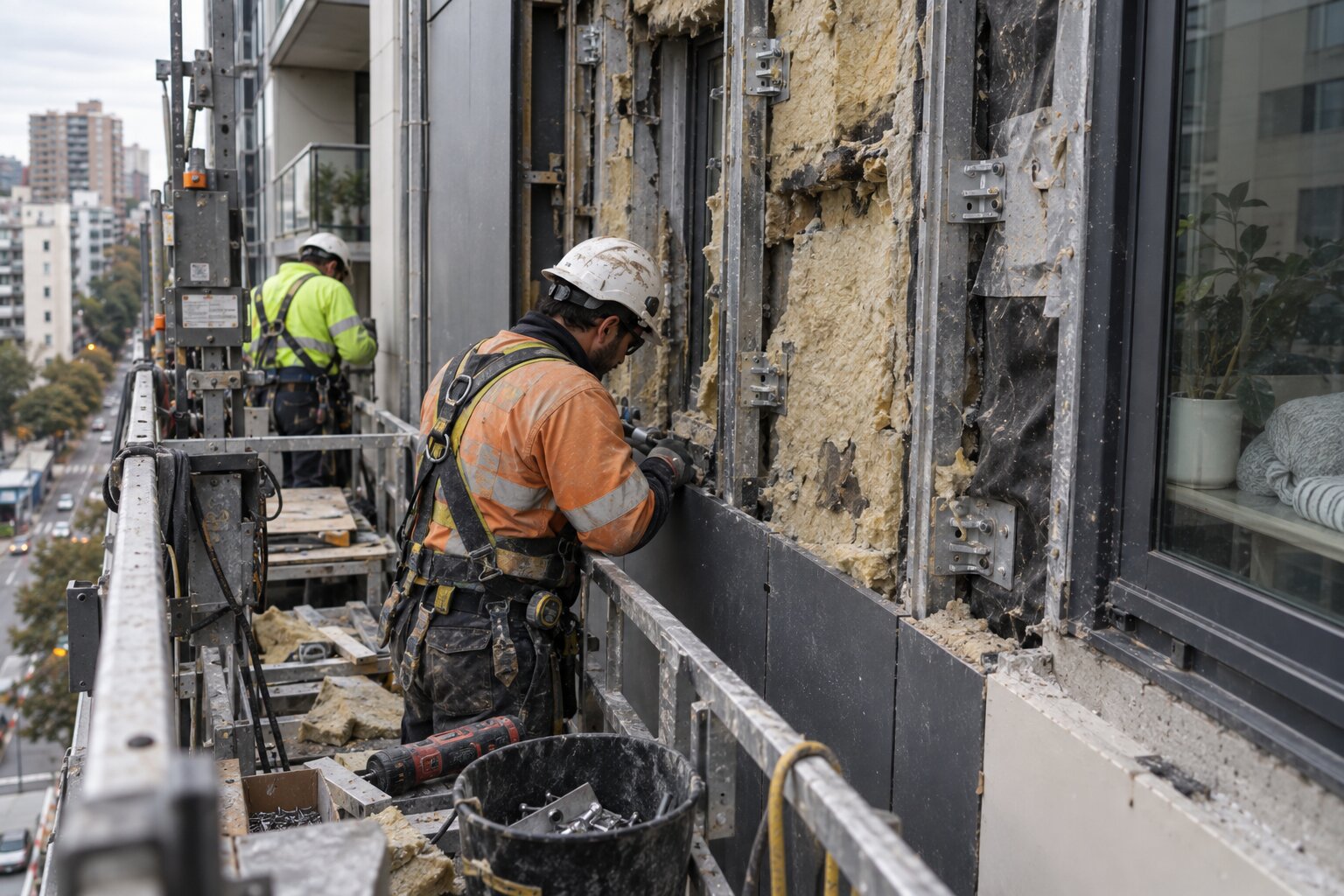
Building remediation with unknown latent conditions and staged works in occupied buildings. Building remediation for structural and compliance issues demands the investigative depth that only pre-construction engagement delivers.
When ECI does not suit the project: straightforward builds with well-documented scope, stable pricing, and low compliance requirements.
How Tau Constructions Delivers ECI for Sydney Developers
Tau Constructions delivers ECI through a director-led construction management model, with senior construction intelligence embedded into feasibility, design, and procurement decisions from day one.
On 499 Kent Street, Tau’s pre-construction input covered build methodology for a complex hotel program, staging for a constrained CBD site, long-lead procurement for specialist systems, and open-book cost planning aligned to the developer’s funding timeline. Twin Pines in Forster required ECI-phase constructability and NCC compliance assessment before scope confirmation for a luxury penthouse transformation.
DBP Act and NCC compliance planning integrates into every Stage 1 engagement for Class 2 and commercial projects. For operational sites, Tau’s live environment expertise addresses staging, sequencing, and access planning that protects tenants and ongoing business operations. Tau’s 20-year track record spans commercial, residential, hospitality, and remediation sectors, with cross-sector depth that identifies risks single-sector builders miss.
ECI vs Design and Construct
ECI and Design & Construct address different project needs. ECI engages the contractor as a collaborative advisor while design responsibility remains with the client’s consultants. D&C transfers full design and construction responsibility to the contractor.
| Feature | ECI | Design & Construct |
| Contractor joins | During design (~30–50%) | After the concept brief |
| Design responsibility | Client’s consultants | Transfers to the contractor |
| Pricing model | Open-book → GMP or lump sum | Fixed price from the award |
| Cost certainty | Progressive through Stage 1 | At contract signing |
| Best for | Complex, high-risk, uncertain scope | Well-defined brief, single accountability |
Some projects use ECI in Stage 1, then convert to D&C for Stage 2, the models complement each other. Tau’s integrated design and construct delivery outlines that conversion in practice.
What Happens When Developers Skip ECI
Developers who engage builders after design finalisation face predictable problems that early contractor involvement eliminates.
Design conflicts surface mid-construction as costly variation claims. Lump-sum tenders carry inflated risk premiums because the builder prices for every unknown. Long-lead items ordered after contract award delay programs by weeks. Compliance gaps, fire safety, acoustic performance, and DBP Act documentation emerge at the certification stage, forcing redesign. Adversarial relationships produce disputes that erode margins and extend timelines. These patterns repeat across commercial refurbishment and live environment projects where unknown conditions demand pre-construction investigation.
Key Takeaways
Early Contractor Involvement gives Australian developers a measurable advantage: earlier collaboration produces better cost certainty, faster delivery, and fewer disputes on complex projects. The two-stage model protects developer control through open-book pricing and staged conversion. And the quality of ECI depends on who delivers it; director-level involvement, cross-sector experience, and regulatory depth determine outcomes.
To discuss early contractor involvement for your next Sydney project, contact Tau Constructions directly.
Frequently Asked Questions
Does ECI cost more than traditional procurement?
ECI involves a Stage 1 pre-construction fee, but delivers lower total project costs. Industry data shows approximately 7% savings because design conflicts, compliance gaps, and procurement risks get resolved before construction, reducing variations and claims.
When should a developer use ECI?
ECI suits complex, high-risk, or compliance-intensive projects: Class 2 residential under the DBP Act, hospitality requiring fast-track delivery, remediation with unknown conditions, and commercial builds on constrained sites.
How does ECI align with the DBP Act in NSW?
The DBP Act requires registered practitioners and declared design documentation for Class 2 buildings. ECI embeds compliance into pre-construction, addressing practitioner registration, design declarations, and documentation before construction begins.