
A commercial builder should be appointed in stages, not at a single point before or after design. Complex projects need buildability input as early as concept design, through Early Contractor Involvement (ECI), even though that means trading away early price certainty. Simple, low-risk projects are better served by appointing after documentation is complete, when tendering delivers a fixed price against a fixed scope.
Tau Constructions applies this staged model across Sydney, including early contractor involvement carried through to a separately awarded early works contract on a 223-room Sydney CBD hotel.
Three Points in the Design Programme Where Builders Get Appointed
A commercial builder can be engaged at three points in a project’s design programme, and each point uses a different contractual instrument.
This is not the same question as which procurement method delivers the better outcome, which is covered separately. This page answers a narrower question: at what point does each path actually bring a builder in.
| Path | Appointment point | Instrument |
| Early Contractor Involvement (ECI) | Roughly concept to schematic design, before documentation is fixed | A pre-construction services agreement, separate from and ahead of the main contract |
| Traditional tender | Once documentation is complete | A contract awarded following competitive pricing against a fixed scope |
| Design and construct | Before a documented design exists, from brief stage | A single contract covering both design and construction under one entity |
Design completion is sometimes expressed as a percentage rather than a soft label. Roughly 30 percent design, concept through schematic, is the point ECI typically engages. Traditional tender sits close to 100 percent design.
Design and construct sits outside this scale altogether, since one entity holds both roles from the brief onward and there is no separate point at which a design is finished and handed over for pricing. Complexity decides which path fits, covered next.
The Trade-off Every Appointment Decision Makes
Early appointment buys buildability input and costs later price certainty. Traditional tendering buys the reverse.
Early appointment reviews the layout before it locks, catches services or structural conflicts before they reach documentation, and identifies risk while it still costs a drawing revision rather than a variation. The trade-off: pricing happens against a scope still in motion, so a fixed number arrives later in the programme.
Traditional tendering prices against a fixed, finished scope, which produces comparable quotes across multiple tenderers. The trade-off: the design has already been locked in without construction input, so any buildability issue it missed is now built into the drawings being priced.
Neither point is a universal answer.
Pushes toward earlier appointment:
- Site or structural complexity
- Heritage fabric
- Live environment constraints
- Unusual services
Pushes toward later appointment:
- A simple, repeatable scope
- Low overall risk
- Priority on early price certainty over design input
Content that answers this question with “always appoint early” is stating the premise of a service being sold, not a considered position. For the fuller comparison between early involvement and traditional tendering across cost certainty, design optimisation and risk, see ECI versus traditional tendering in NSW.
How Staged Appointment Works on a Complex Project
On a complex commercial project, appointment is rarely one decision. It is two or more, made at different points against different scopes.
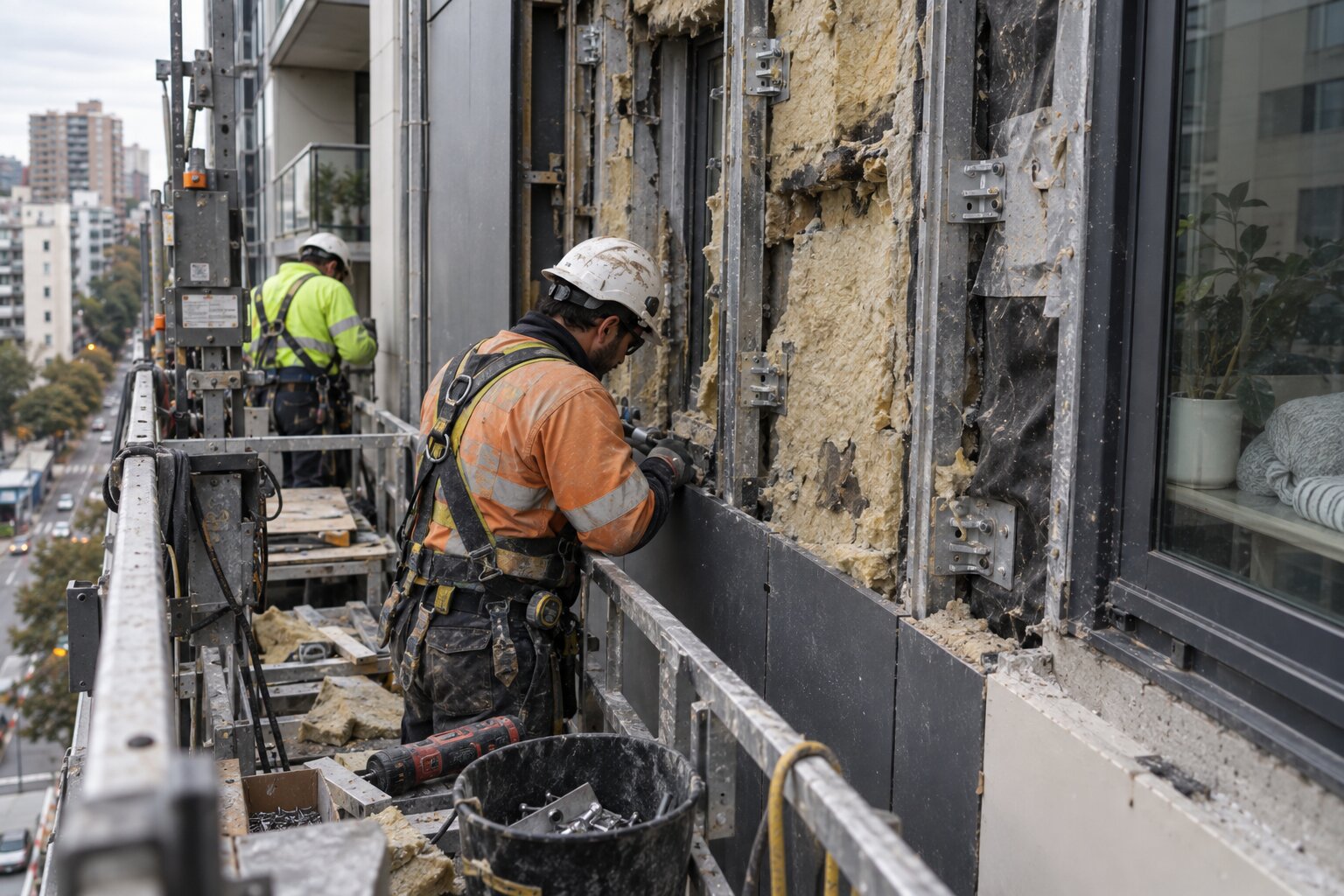
Tau’s engagement on 499 Kent Street, a 223-room five-star hotel in Sydney CBD, shows why. The site carries a heritage brick facade, sits inside a constrained CBD footprint, and required early, disruptive works, demolition and hazardous materials removal, before the main building programme could start.
None of that can be priced accurately as one lump sum before design and approvals are settled, and none of it can wait until design and approvals are settled either, because it gates everything built after it.
Tau was engaged under Early Contractor Involvement, covering design management and authority liaison from Development Application through to Construction Certificate documentation. That phase ran alongside the design programme, reviewing buildability and approvals strategy as the drawings developed rather than after they were finished.
Only once the ECI phase concluded was Tau separately awarded the early works contract, covering:
- Council and work zone approvals
- Hoardings and site set-up
- Hazardous materials removal
- Structural steel bracing of the heritage brick facade
- Structural demolition
That is two distinct award decisions, not one appointment, and it happened in that order because the early works needed to start before full documentation of the main build was complete.
The point most early-contractor-involvement content leaves out: engaging a builder early is the strongest position from which to win the following stages, not a guarantee of winning them. A contractor who has reviewed buildability through design and approvals holds knowledge nobody else on a later tender list has.
At 499 Kent Street, the early works contract followed as a separate award decision once the ECI phase was complete, rather than continuing automatically from it. Most content selling early involvement implies the opposite, that engaging early means the same firm builds the whole project by default. The more accurate version, that early involvement earns position rather than guarantees it, is the stronger claim, not the weaker one.
The same logic applies beyond hotels and heritage sites. Any project with an early, disruptive scope, demolition, hazardous materials, structural bracing or site enabling works, that has to start before the main design is fully documented is a candidate for the same staged pattern: an ECI phase to develop the design and approvals, followed by a separately awarded early works contract to clear the site for what comes next.
Why Timing Is Also a Capacity Decision
Strong commercial head contractors carry forward pipelines the same way strong residential builders do, and waiting until documentation is complete to start that conversation risks finding the right contractor already committed elsewhere.
A contractor capable of reviewing a heritage facade, coordinating hazardous materials removal, and sequencing early works against a live CBD site is not a common capability. Tau Constructions is one of a small number of Sydney contractors carrying that combination, and firms with it are not sitting idle waiting for a finished tender package.
Appointment timing is therefore not only a decision about design. It is also a question of which contractors are still available to have the conversation by the time a project reaches them.
Get the Builder’s Input While the Design Can Still Change
The cost of skipping buildability input rises the same way its value falls, fastest once documentation is locked in. Tau Constructions is director-led across every project, from early design review through to site works on complex and heritage sites.
Talk to Tau about appointment timing on your project.
Commercial Builder Appointment FAQs
Does appointing a contractor early guarantee they win the construction contract?
No. Early involvement puts a contractor in the strongest position to win later stages, because they hold buildability knowledge from the design and approvals phase, but the award that follows is typically a separate decision rather than an automatic continuation.
What is 30, 60 or 90 percent design, and why does it matter for appointment timing?
These figures describe how complete a design is at a given point, with 30 percent covering concept through schematic design and 100 percent meaning documentation is finished. Early Contractor Involvement typically engages around 30 percent design.
When does a design and construct model make more sense than appointing separately?
Design and construct suits projects where a client wants one entity accountable for both design and construction from brief stage onward, rather than coordinating a designer, an early contractor and a builder as three separate relationships.
How much later does traditional tendering push back price certainty compared to early engagement?
Traditional tendering delivers a fixed price once documentation is complete, close to 100 percent design. Early engagement delivers buildability input much sooner but a firm price later, since pricing happens against a scope still being finalised.
Why do online guides about builder appointment timing focus mostly on home building?
Builder licensing in most Australian states is fundamentally a residential compliance mechanism, so search demand and published guidance on this exact question skew toward homeowners rather than commercial developers.